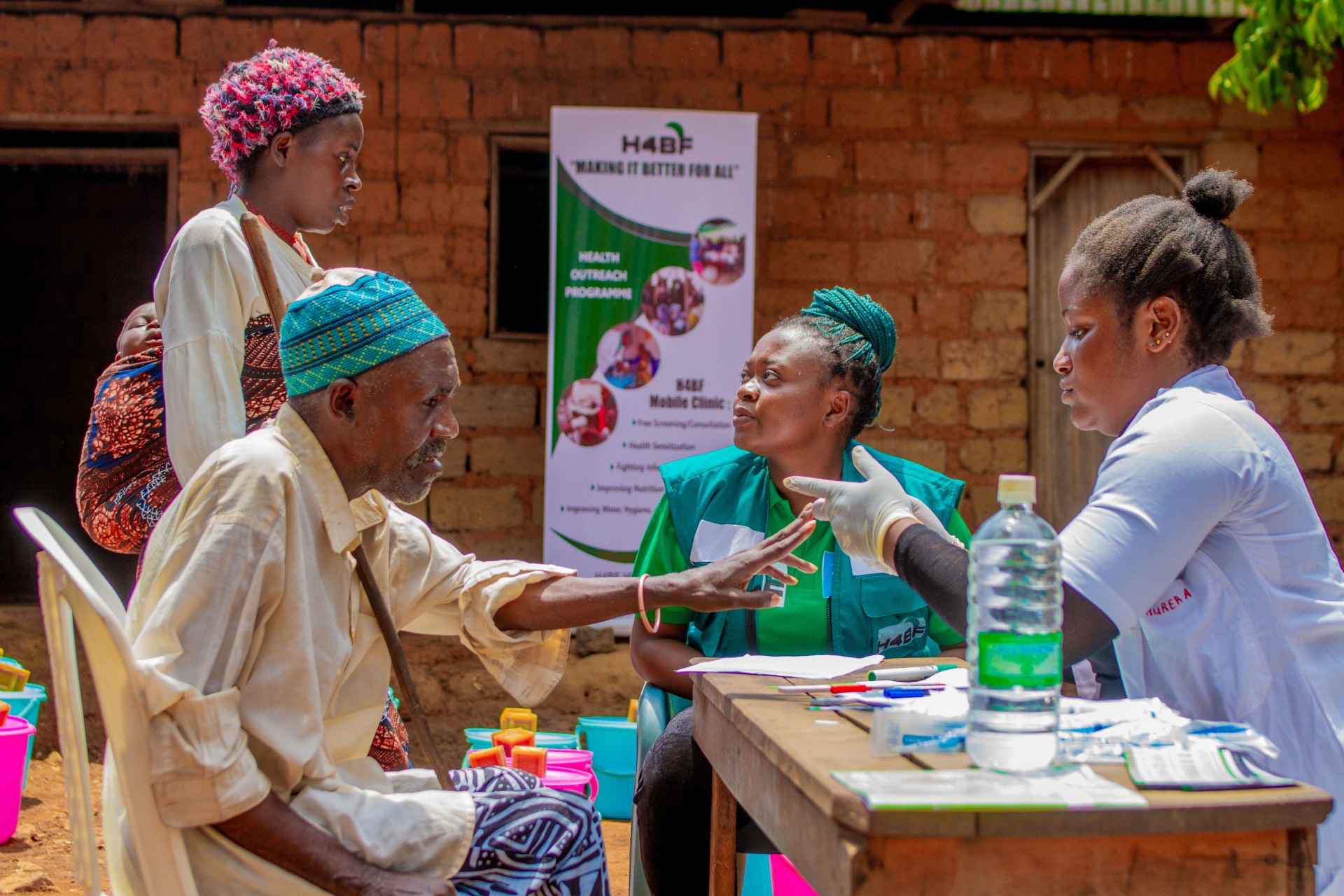
Hope for a Better Future (H4BF) is dedicated to driving innovation from the ground up, improving health, ending hunger, overcoming hardship, and empowering youth, women, and girls. Through sustainable development programs, community engagement, and partnerships, we aim to uplift marginalized populations, foster economic empowerment, and create positive, lasting change in vulnerable communities.
Get Involved : Make a Meaningful Impact

    CopyrighCopyright © 2025 H4BF . All Rights Reserved.eserved.
    HOPE FOR A BETTER FUTURE · CAMEROON

    CLEAN ENERGY & ENVIRONMENTAL SUSTAINABILITY

    Powering communities.
    Building green livelihoods.

    H4BF works with communities, local entrepreneurs and technical partners to expand access to clean-energy solutions, develop practical skills and strengthen locally led environmental action.

    ★Top 3 · Doers Category
    Africa CSO Awards 2026 · EPIC-Africa
    Community-based clean energy · North-West and other programme communities in Cameroon
    OUR PROGRAMME

    From access to a local energy ecosystem.

    Our work is designed to connect household energy access with local service delivery, women- and youth-led enterprise, renewable-energy skills and environmental responsibility. The ambition is not only to distribute products, but to strengthen the people and community structures that help make clean-energy services accessible and useful.

    THE CHALLENGE / WHY THIS WORK MATTERS

    Communities are facing a connected energy and climate challenge.

    In rural and climate-vulnerable communities, unreliable energy access, dependence on traditional cooking fuels, environmental pressure and limited local technical services reinforce one another. Addressing only one part leaves households and livelihoods exposed.

    01

    Energy poverty limits opportunity.

    Electricity access in Cameroon remains uneven. World Bank SDG7 data report national access at 72% in 2024, but rural access at only 42.7%. For households and small businesses beyond reliable grid services, lighting, charging, refrigeration, communications and productive activity can remain costly or constrained.

    Source: World Bank / Tracking SDG7 ↗
    02

    Traditional cooking creates health and environmental burdens.

    Only 32% of Cameroon’s population had access to clean fuels and technologies for cooking in 2024, according to the World Bank’s SDG7 data. The majority therefore remain outside the clean-cooking access measure. Reliance on polluting household fuels can expose families—particularly women and children who spend time near cooking areas—to harmful household air pollution, while fuelwood demand can add pressure to local resources.

    Source: World Bank clean-cooking indicator ↗
    03

    Climate change is intensifying existing vulnerabilities.

    The World Bank’s 2025 Cameroon Climate Risk Profile reports a national warming trend of 0.35°C per decade during 1991–2020. It identifies increasingly erratic rainfall, longer drought periods in some regions, and a growing risk of extreme rainfall events. These shifts complicate farming decisions, water management and preparedness for floods and landslides.

    Source: World Bank Climate Risk Profile, 2025 ↗
    04

    Climate shocks threaten food systems and livelihoods.

    Agriculture accounts for about 42% of employment in Cameroon, according to the World Bank profile. Erratic rainfall, heat, soil degradation and extreme events can undermine production, damage assets and deepen income insecurity for smallholder farmers and households whose livelihoods depend on natural resources.

    Source: World Bank Climate Risk Profile, 2025 ↗
    The challenge is interconnected.

    When energy is expensive or unreliable, households and enterprises have fewer options to study, trade, preserve products and access services. When cooking relies on polluting fuels, health and environmental pressures persist. When climate shocks affect crops and infrastructure, families with few assets and limited services have less capacity to recover. Women, young people, smallholder farmers and low-income rural households can face particularly high barriers.

    WHY ACTION IS NEEDED NOW

    Climate resilience must be built into everyday services and local economies.

    The IPCC finds that climate impacts are already causing losses across African development sectors, including reduced food production, water shortages, biodiversity loss and health impacts. It also concludes that risks increase with further warming and that adaptation measures can reduce present-day risks while delivering wider development benefits.

    Cameroon’s updated 2021 NDC identifies energy, agriculture, forestry and other land use, and waste among priority sectors. Its mitigation ambition is 35% below the 2010 baseline by 2030, comprising 12% unconditional and 23% conditional on international support. The country’s National Climate Plan, approved in July 2025, calls for a coordinated approach to emissions reduction, energy transition, resilience of communities and agro-pastoral systems, ecosystem protection, institutional capacity and climate finance mobilisation.

    H4BF’S RESPONSE / FROM PROBLEM TO PRACTICAL ACTION

    We connect clean-energy access with the capacity to adapt and thrive.

    H4BF’s intervention combines technologies, community delivery, skills and enterprise. This integrated approach responds to immediate household needs while building local capability and longer-term resilience.

    ENERGY ACCESS

    Make cleaner energy more accessible.

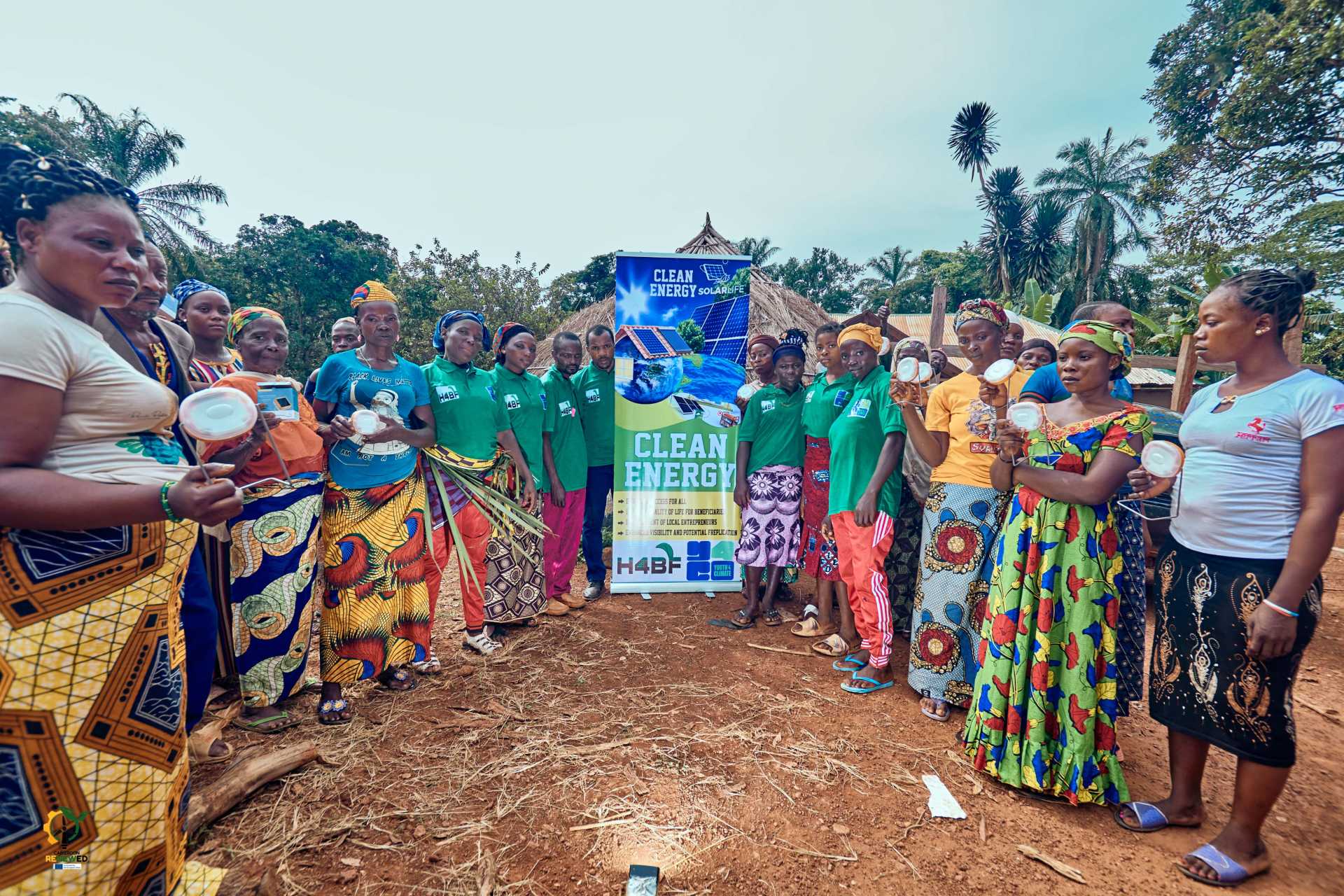
    Solar lighting and improved cookstoves provide practical alternatives for households and communities that face gaps in reliable and affordable energy services.

    LOCAL CAPACITY

    Build skills close to where services are needed.

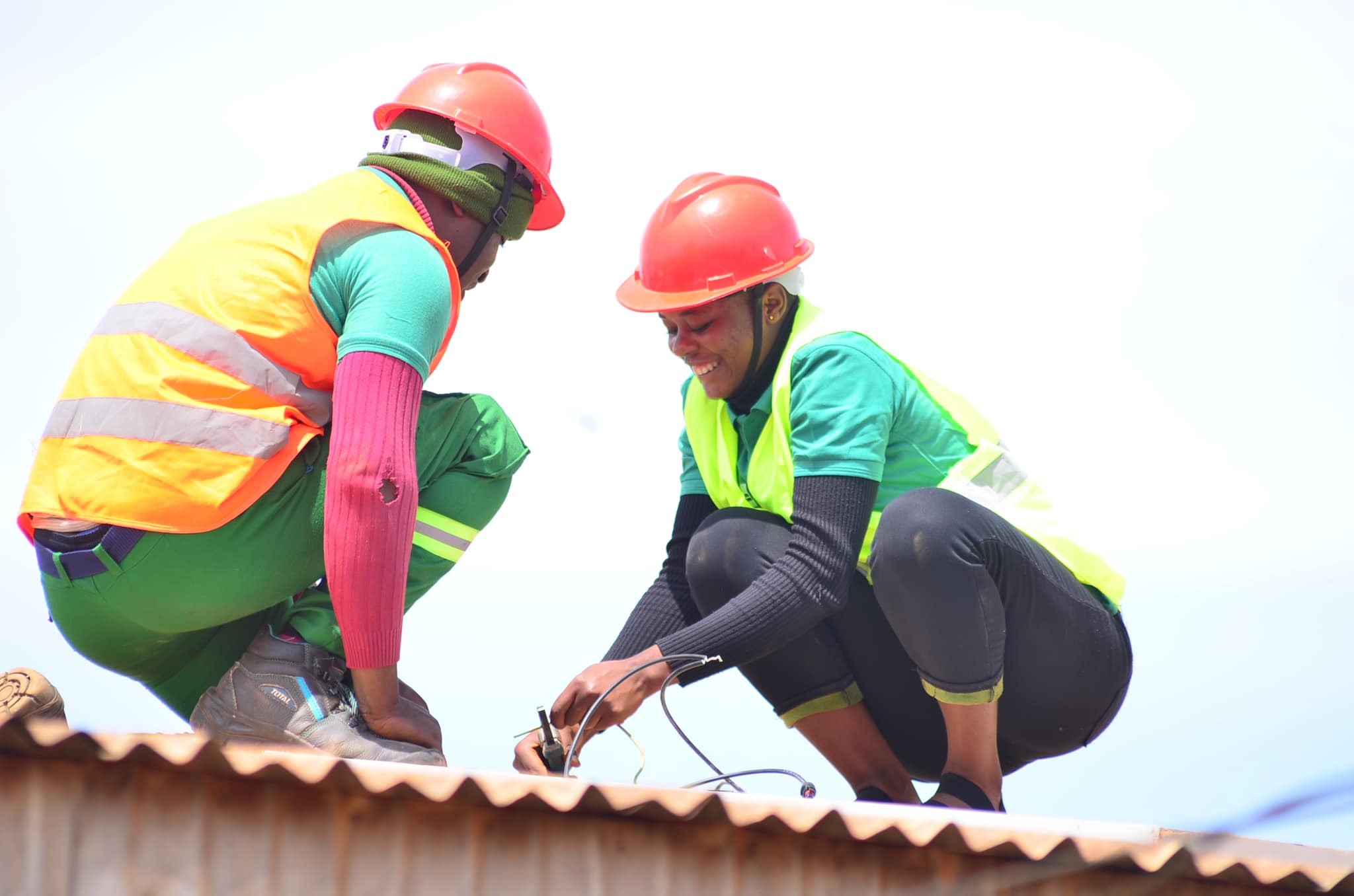
    Renewable-energy training and technical learning strengthen the potential for installation, maintenance, repair and local service provision.

    INCLUSIVE LIVELIHOODS

    Enable women and youth to participate.

    Community energy centres and enterprise support create pathways for women and young people to take part in distribution, service delivery and green economic activity.

    ENVIRONMENTAL RESILIENCE

    Link energy action with resource recovery.

    Green Hills and related environmental activities explore waste sorting, organic recovery and biofertiliser pathways that can connect environmental management with healthier soils and agriculture.

    H4BF · CLEAN ENERGY FOR ALL

    Live programme results.

    A snapshot of six priority results, refreshed from H4BF’s public Community Empowerment Management Information System (CEMIS).

    PEOPLE REACHED18,742
    BENEFICIARY HOUSEHOLDS3,420
    SOLAR LAMPS & LANTERNS DISTRIBUTED12,640
    CLEAN COOKSTOVES DISTRIBUTED2,200
    CLEAN ENERGY CENTRES8
    WOMEN & YOUTH ENTREPRENEURS SUPPORTED13
    TOTAL CO₂ EMISSIONS AVOIDED · 2014–2026 Loading total… Cumulative CEMIS result (tCO₂e)

    Carbon total is being retrieved from CEMIS.

    Explore the complete impact record.View all indicators, programme results and reporting periods on the CEMIS Impact page.
    Explore more impact data ↗
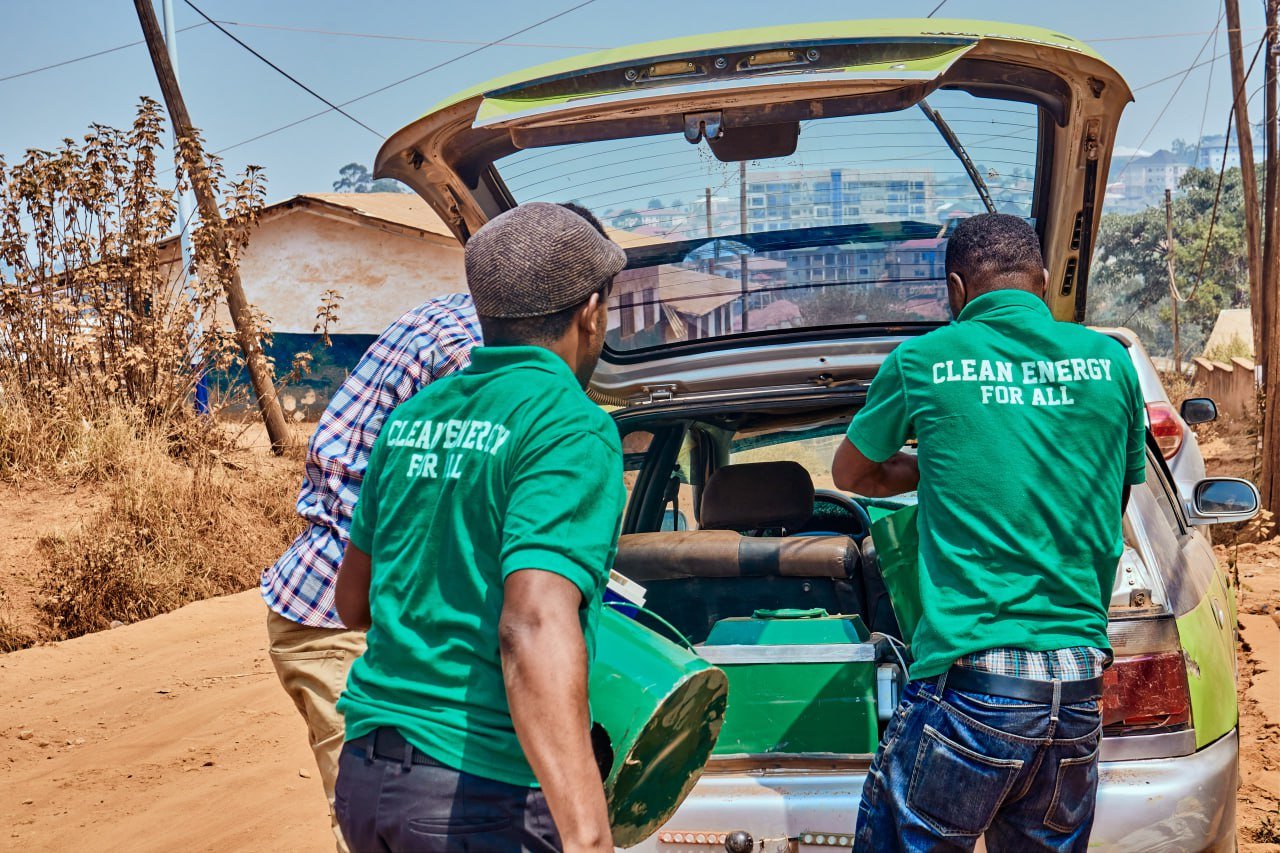
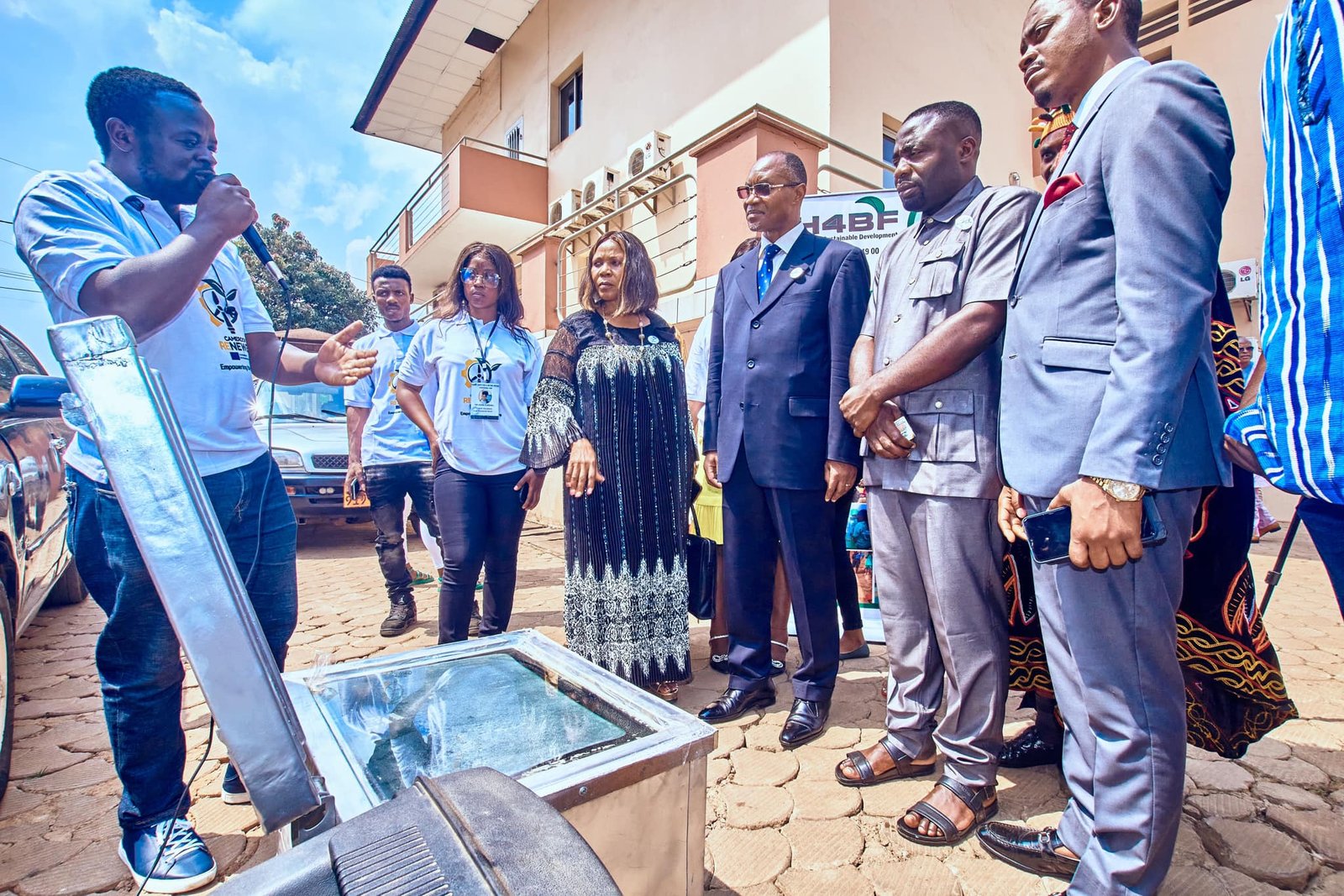
    H4BF clean energy entrepreneur and solar products at a community service pointLOCAL DELIVERY · LOCAL ENTERPRISE
    02 / HOW THE MODEL WORKS

    Clean Energy Centres bring services closer to people.

    The centres provide a community-facing platform for access to solar products and related services. The network links practical energy solutions with local entrepreneurs and skills development.

    01

    Community accessConnect households and small businesses with solar lighting, clean-cooking products and relevant services.

    02

    Local enterpriseSupport women and young people to participate in distribution and clean-energy service delivery.

    03

    Technical capacityConnect practical delivery with renewable-energy training, installation, maintenance and repair competencies.

    04

    Feedback and adoptionEngage communities and use monitoring to understand access, adoption, service use and improvement needs.

    03 / PROGRAMME PORTFOLIO

    One portfolio. Connected solutions.

    H4BF’s clean-energy and environmental work spans household solutions, technical skills and emerging circular-economy pathways.

    01 · HOUSEHOLD ENERGY
    ☼

    Solar lighting

    Solar lamps and lanterns distributed to households and community users, extending access to lighting and reducing dependence on kerosene lamps.

    02 · CLEANER COOKING
    ♨

    Improved cookstoves

    Energy-efficient cookstoves offer households a practical alternative to traditional cooking methods and can help reduce fuel demand when appropriately selected and used.

    03 · SKILLS & JOBS
    ⌁

    Renewable-energy skills

    H4BF connects youth and women to renewable-energy learning and enterprise pathways, including through HOBEFI and partner-supported vocational capacity building.

    04 · GREEN ENTERPRISE
    ↗

    Women- and youth-led services

    Local entrepreneurs participate in clean-energy distribution and services, helping build community presence and pathways to livelihood opportunities.

    05 · CIRCULAR ECONOMY
    ♻

    Waste recovery

    H4BF is developing organic-waste sorting, collection and recovery activities, with compost and biofertiliser production as a development pathway through Green Hills.

    06 · PRODUCTIVE USE
    ◫

    Solar drying and resource efficiency

    H4BF explores productive-use opportunities such as solar drying and agricultural-waste reuse to connect clean energy with agricultural value chains.

    04 / PEOPLE & ENTERPRISE

    Local people are part of the solution.

    The Clean Energy for All model links energy access with the participation of women and young people as entrepreneurs and service providers. H4BF’s October 2026 programme update describes a network of 13 women and youth entrepreneurs supporting local clean-energy services.

    This approach is important in communities where distance, affordability and limited access to technical services can make energy solutions difficult to maintain. Local service points can improve proximity, responsiveness and community engagement.

    Read the field-visit update ↗
    Community members using solar lighting supported through H4BF clean energy work
    05 / IMPLEMENTATION EXPERIENCE

    Experience, capability and development pathways.

    H4BF combines community implementation with vocational capacity, technical cooperation and environmental initiatives to strengthen the clean-energy ecosystem.

    IMPLEMENTED PROGRAMME

    Clean Energy for All

    Community clean-energy delivery through solar lamps, clean cookstoves, Clean Energy Centres and women- and youth-led enterprise. H4BF reports support from JAC Trust and Youth4Climate / UNDP Italy.

    Programme results ↗
    CAPACITY-BUILDING PARTNERSHIP

    Cameroon RenewED

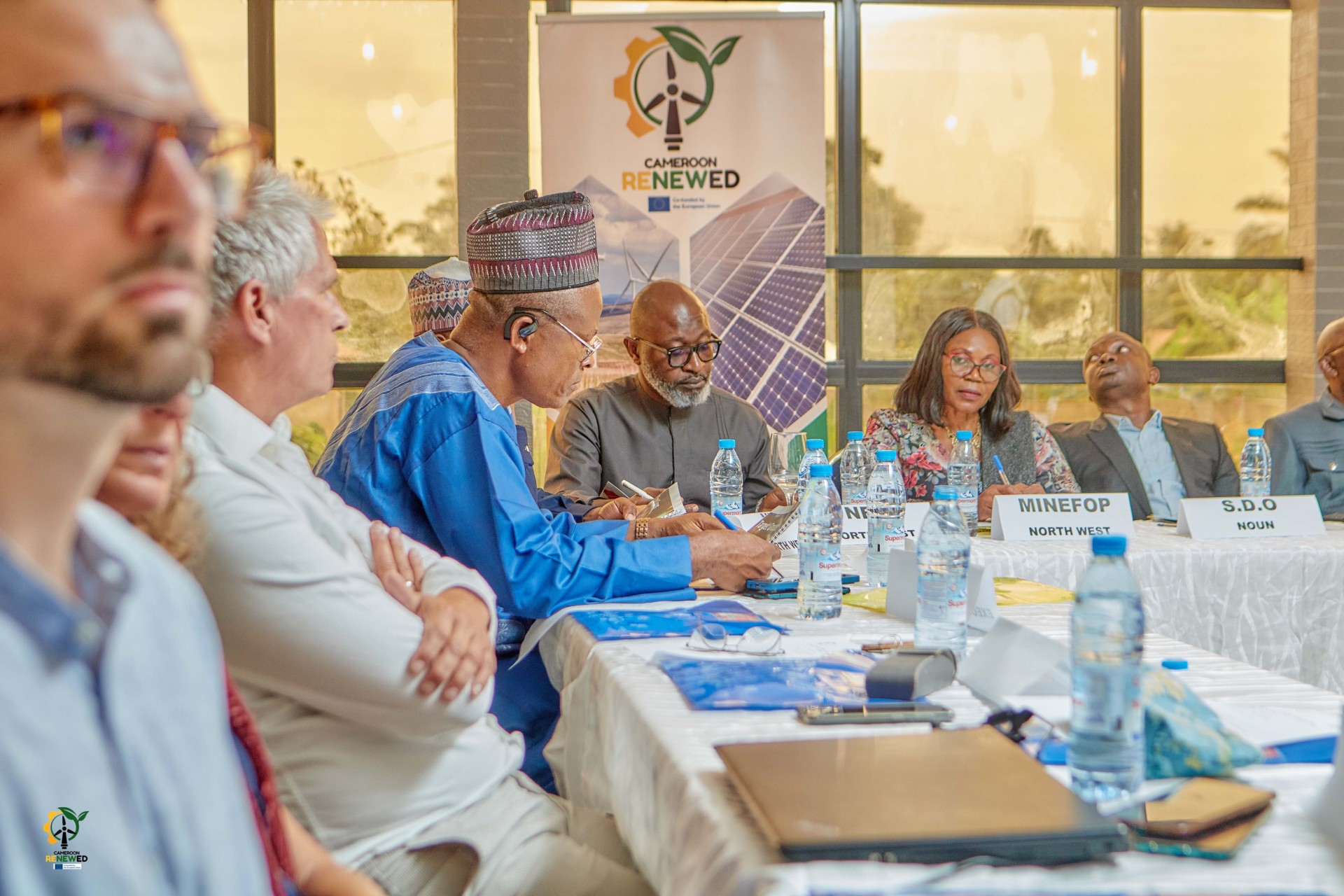
    EU Erasmus+ capacity-building collaboration involving H4BF and partners including Noorderpoort, Apro Formazione and MasterPeace, focused on strengthening vocational education and training in renewable energy.

    Explore more ↗
    DEVELOPMENT PATHWAY

    Green Hills

    H4BF is developing an organic-waste recovery and biofertiliser pathway in the North-West Region, linking community sorting and collection with circular-economy opportunities.

    Environmental context ↗
    TECHNICAL CAPACITY

    HOBEFI

    HOBEFI provides a vocational training platform for renewable-energy competencies, including practical learning in installation, maintenance and related technical skills.

    Visit HOBEFI ↗
    06 / PARTNERSHIPS

    Collaboration strengthens delivery.

    H4BF works with institutional funders, climate programmes and technical partners to expand community clean-energy access, vocational skills and women- and youth-led enterprise.

    Programme funding partners

    JAC TrustYouth4ClimateUNDP ItalyEuropean Union · Erasmus+

    Technical and vocational partners

    MasterPeace InternationalNoorderpoortApro Formazione
    07 / WHERE PARTNERS CAN CONTRIBUTE

    Priority areas for collaboration.

    H4BF welcomes discussion with funders, technical institutions, responsible businesses and public partners interested in strengthening community clean-energy delivery and environmental resilience.

    01

    Strengthen Clean Energy Centres

    Improve service capacity, product access, technical support, maintenance systems and monitoring across the existing network.

    02

    Develop women- and youth-led green enterprises

    Support entrepreneurship, business skills, access to appropriate equipment and stronger local service models.

    03

    Expand renewable-energy skills

    Strengthen practical training, trainer capacity, equipment and links between vocational learning and local service demand.

    04

    Advance circular-economy solutions

    Develop waste sorting, collection, organic recovery, product testing and viable biofertiliser pathways.

    LET'S DEVELOP THE NEXT PHASE

    Explore a programme partnership with H4BF.

    H4BF works with prospective partners to shape practical projects with clear objectives, implementation plans and measurable outcomes.

    Contact H4BF ↗
    08 / ACCOUNTABILITY

    Responsible delivery. Clear evidence.

    H4BF recognises that effective partnerships depend on transparent management, credible results and appropriate safeguards. H4BF applies programme monitoring, financial management and safeguarding practices to support effective delivery and accountability.

    Institutional partners can engage with H4BF on governance, financial management, technical capacity and safeguarding as part of partnership development.

    01

    Governance and legal standingInstitutional registration, governance arrangements and relevant authorisations.

    02

    Financial managementProject budgets, financial reporting, procurement and asset-management controls.

    03

    Programme monitoringBeneficiary records, distribution evidence, service data, indicator definitions and reporting periods.

    04

    Safeguards and accountabilitySafeguarding, inclusion, complaints and feedback, and environmental and social risk management.

    HOPE FOR A BETTER FUTURE · CAMEROON

    Working together for cleaner energy and stronger communities.

    We welcome collaboration with development partners, climate and energy programmes, technical institutions, responsible businesses and public authorities.

    HOPE FOR A BETTER FUTURE (H4BF)Cameroon · ngo@h4bf.org · h4bf.orgLive programme indicators are retrieved from H4BF’s public CEMIS results API. Programme information is provided by Hope for A Better Future (H4BF).

    Our Latest Stories

    Capacity building

    In Sabga, Cameroon, community empowerment begins when farmers discover that some of the solutions to…

    Clean Energy & Environmental Sustainability

    Powering communities, transforming lives: How H4BF’s Clean Energy for All project is expanding energy access…

    Stories of Change and Impact