Climate resilience in Cameroon has become an urgent development priority. Changing rainfall patterns, rising temperatures, environmental degradation and increasing pressure on agricultural livelihoods are exposing vulnerable communities to growing climate risks. As El Niño develops, Hope for A Better Future (H4BF) is calling for stronger investment in clean energy, food security, environmental protection and community-led resilience.
November 2026 | Hope for A Better Future (H4BF)
The Climate Challenge: Why Cameroon Must Act Now
Climate change is no longer a distant threat. Its effects are increasingly felt through agricultural losses, pressure on household incomes, environmental degradation and growing vulnerability among rural and crisis-affected communities.
The World Meteorological Organization’s El Niño updates provide global monitoring of this climate phenomenon. Meanwhile, regional forecasts offer important information for Cameroon.
According to the Central Africa Climate Applications Centre (CAPC-AC), October 2026 climate bulletin, maximum temperatures across much of Central Africa were between 0.5°C and 1.5°C above the 1991–2020 average. Normal-to-above-normal rainfall was recorded across Cameroon’s Northwest, West and Southwest regions, among other areas.
The CAPC-AC November 2026–January 2027 seasonal forecast forecasts temperatures 1–1.5°C above normal across much of Cameroon, with normal-to-above-normal rainfall expected in the Northwest and Southwest during this period.
These forecasts do not mean every community will experience the same conditions. They highlight the importance of preparing for different risks, including intense rainfall, flooding, soil erosion, landslides, heat stress and disruption to agricultural activities.
The economic consequences are significant. According to Cameroon’s National Observatory on Climate Change (ONACC), climate-related economic losses affecting major agricultural crops were estimated at FCFA 798.26 billion in 2024. The national assessment covered all ten regions and included consultations with 5,475 farmers.
For communities dependent on farming and natural resources, these pressures threaten livelihoods, food security and economic stability. Climate resilience in Cameroon must therefore become a development and investment priority.
H4BF’s Four Areas of Action for Climate Resilience in Cameroon
H4BF believes climate resilience must go beyond environmental awareness. It must improve how people access energy, produce food, earn incomes, protect their health and manage their environment.
Our work connects four programme areas to address these challenges.
1. Clean Energy and Environmental Sustainability
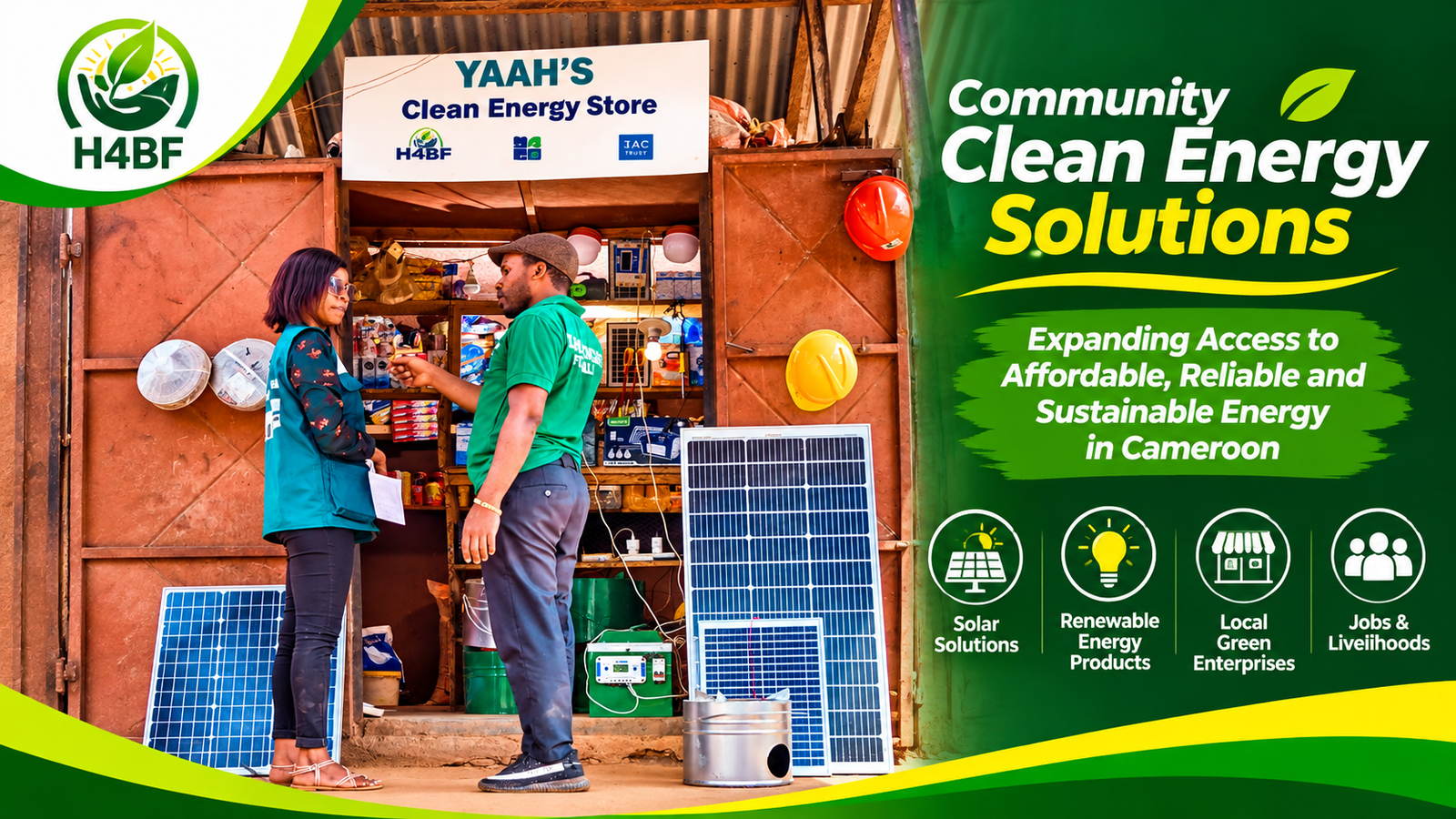
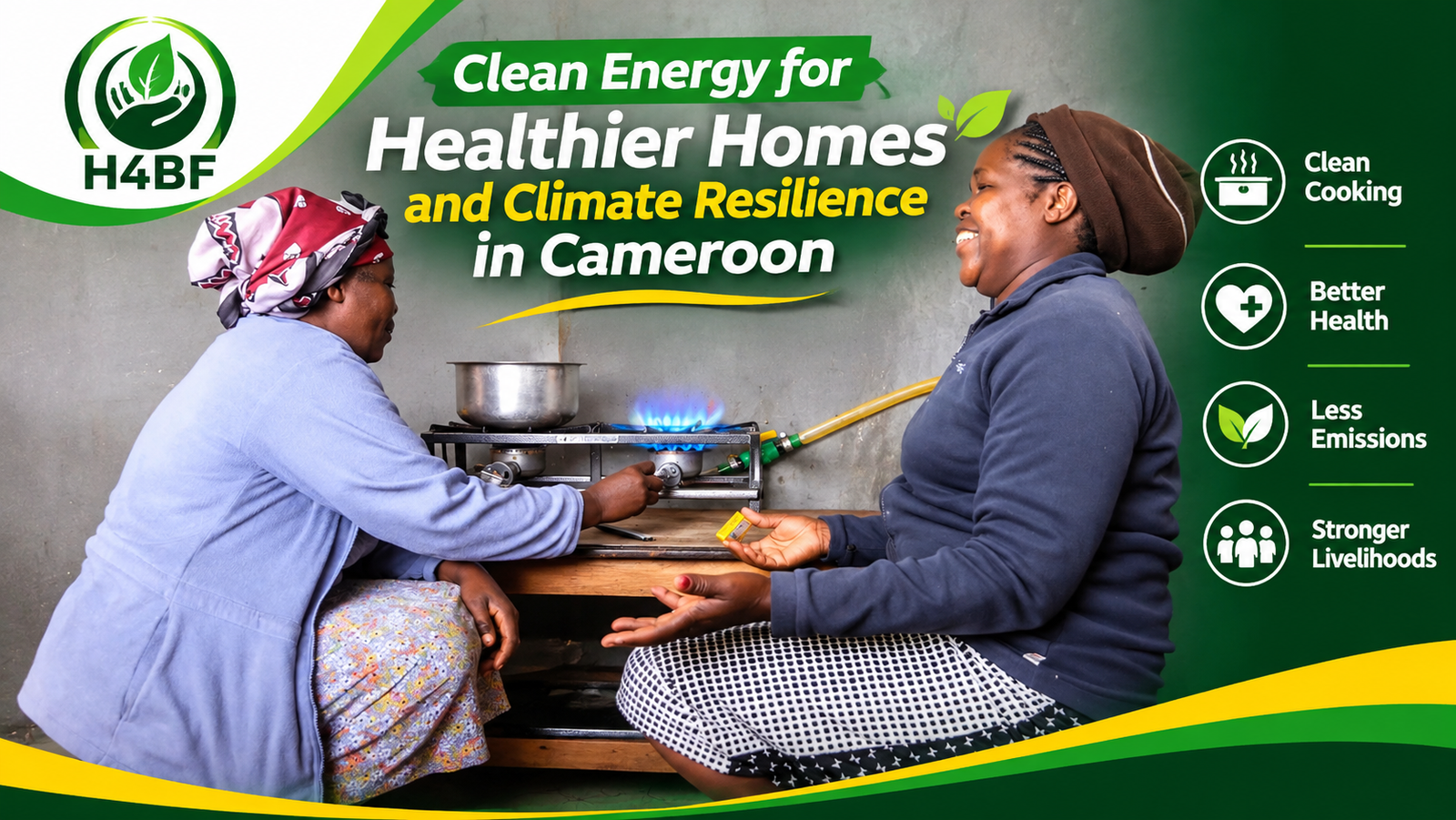
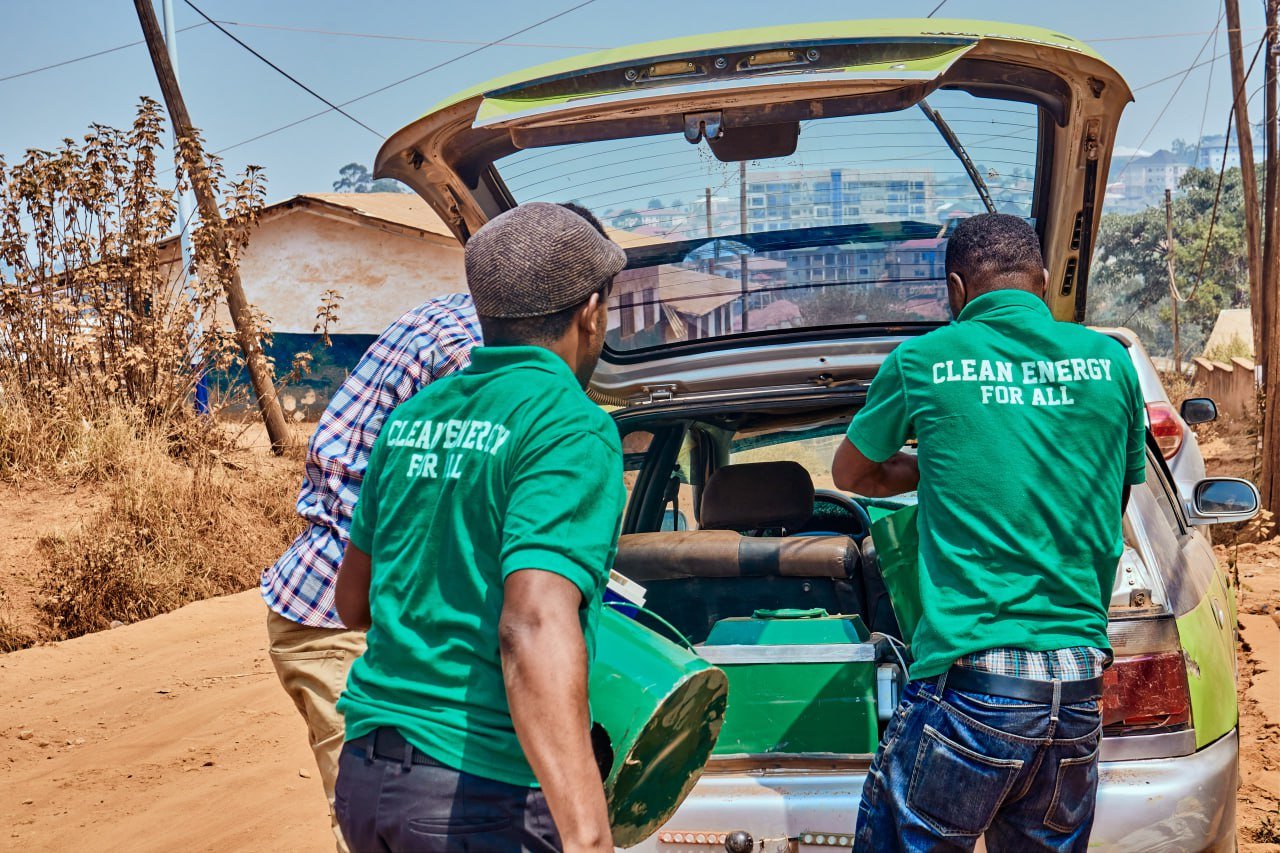
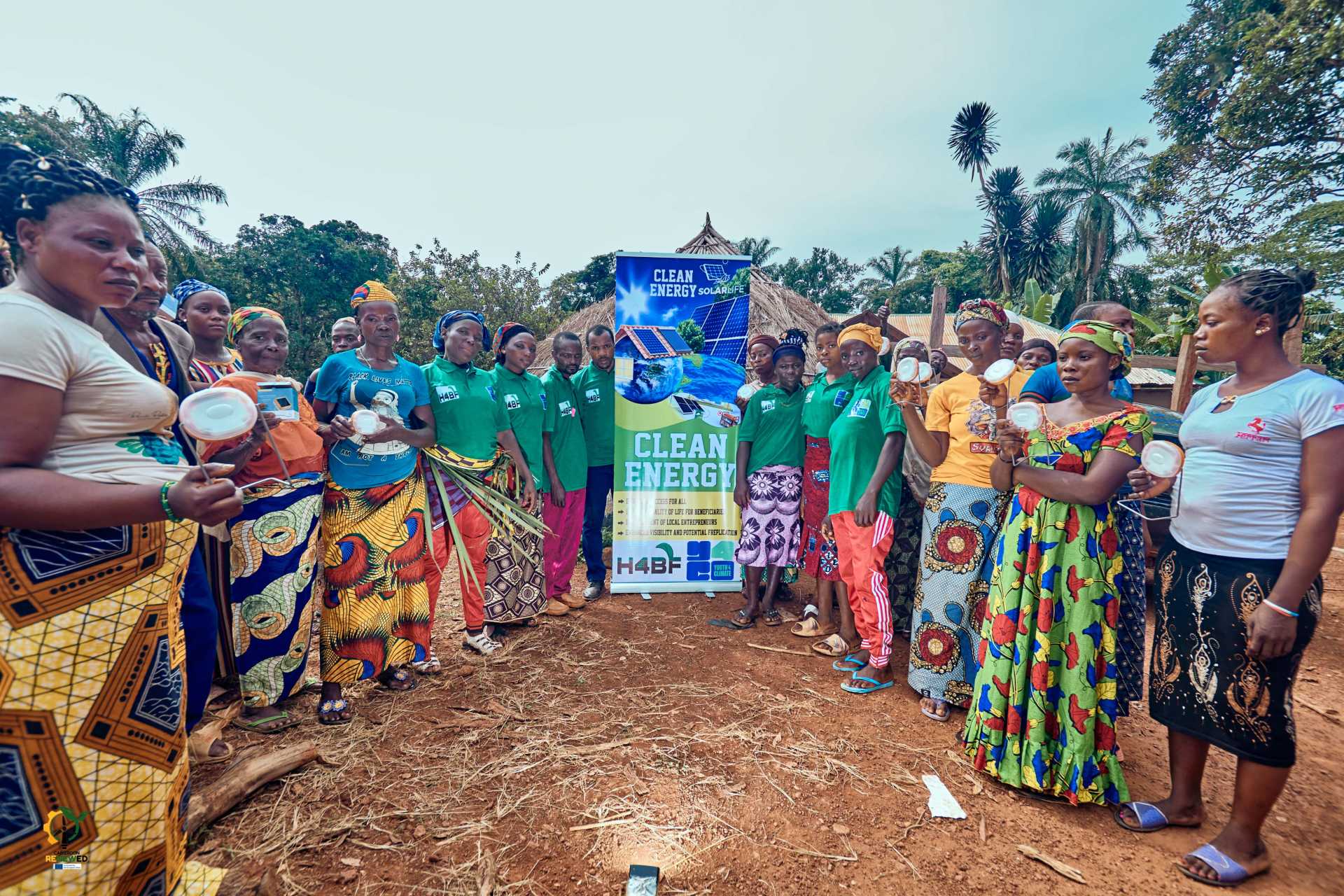
Dependence on firewood and charcoal contributes to pressure on forests, household air pollution and rising energy costs. H4BF promotes renewable energy, clean cooking, biodigesters, organic waste recovery and community-based environmental enterprises.
Our reported clean-energy programme results provide an established foundation for expansion:
| Indicator |
Reported result |
| People reached |
18,742 |
| Beneficiary households |
3,420 |
| Solar lamps and lanterns distributed |
12,640 |
| Clean cookstoves distributed |
2,200 |
| Clean Energy Centres |
8 |
| Solar-lighting adoption |
74.2% |
These results demonstrate the potential of community-based clean-energy solutions. Our priority is to extend their reach and strengthen locally owned delivery models.
Through the JAC Trust-supported Women-Led Circular Energy and Livelihood Cooperatives project, H4BF is advancing biodigester and circular-economy solutions in Bamenda, Nkambe and Magba.
The project targets 150 women engaged in cooperative livelihoods, 700 households and 100 small businesses accessing biogas, 1,200 tonnes of organic waste processed and 1,200 farmers reached over its implementation period. These are project targets, not figures presented as completed achievements.
2. Women and Youth Empowerment
Women and young people must be central to climate solutions. They need access to skills, resources, technologies and economic opportunities to adapt and build sustainable livelihoods.
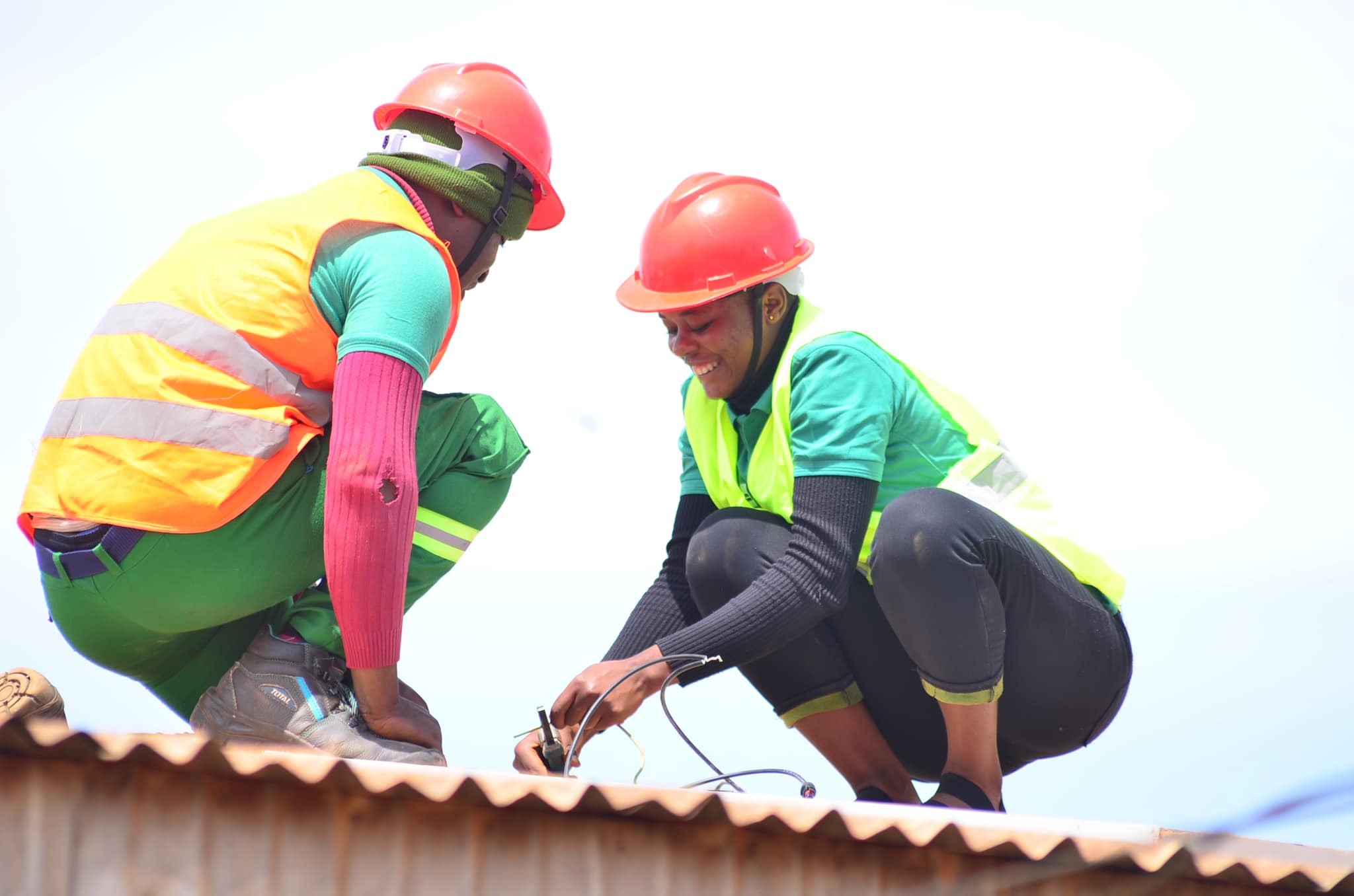
Through HOBEFI, H4BF’s vocational training platform, we develop practical skills in renewable energy, information technology, smart agriculture, fashion and design, and green entrepreneurship.
Our ambition is to equip women and young people to become renewable-energy technicians, agricultural innovators, entrepreneurs and community leaders.
Investing in their skills and enterprises is an investment in stronger local economies and more resilient communities.
3. Community Health and Education
Climate pressures can intensify food insecurity, sanitation challenges and health vulnerabilities, particularly among women, children and households already experiencing hardship.
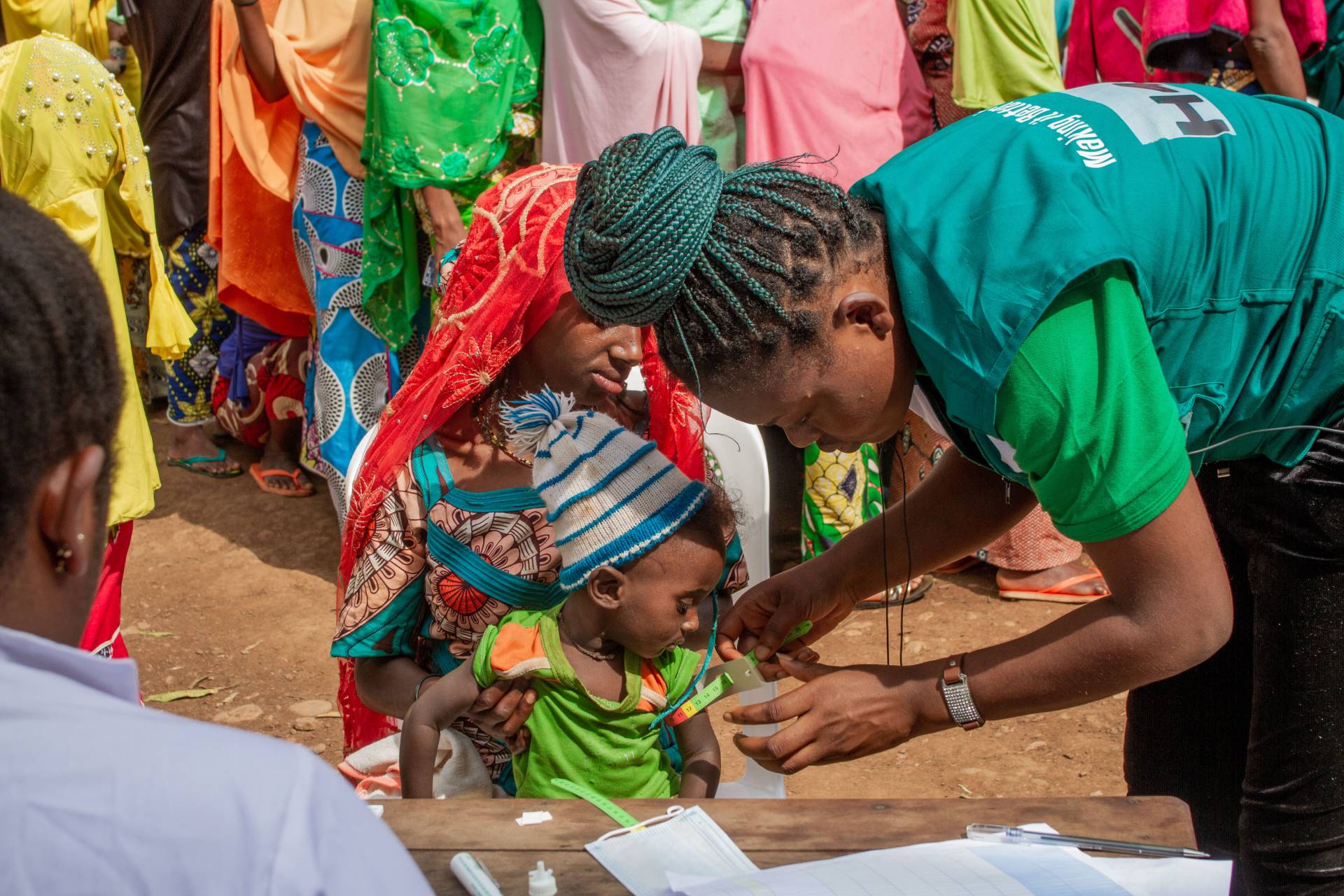
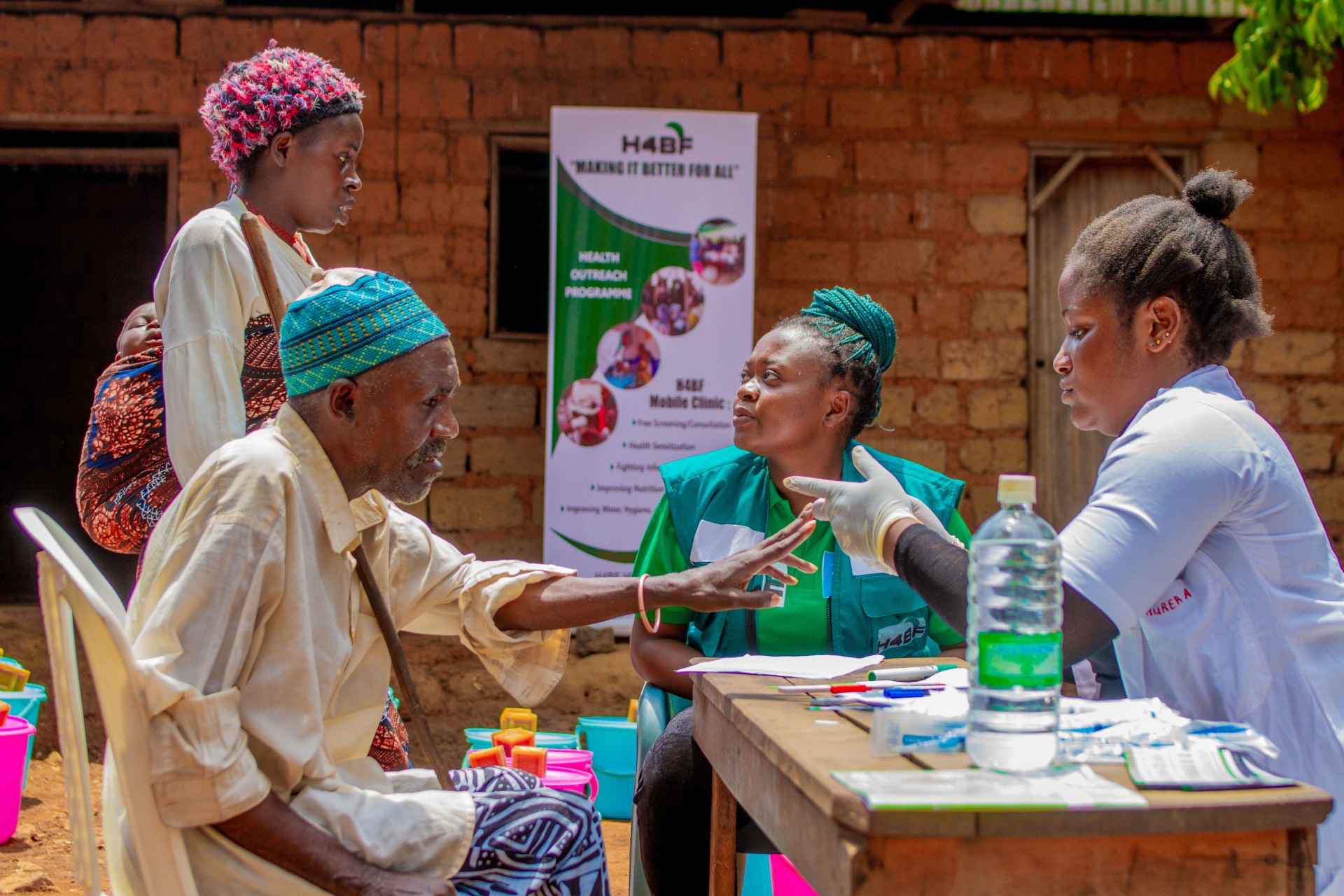
H4BF complements its environmental work through community health outreach, maternal and child health education, protection services, gender-based violence case management, child protection and education initiatives.
Our approach recognises that climate resilience requires healthy, informed communities that can protect their most vulnerable members.
4. Climate Justice and Advocacy
Communities experiencing climate impacts must have a voice in the decisions affecting their future.
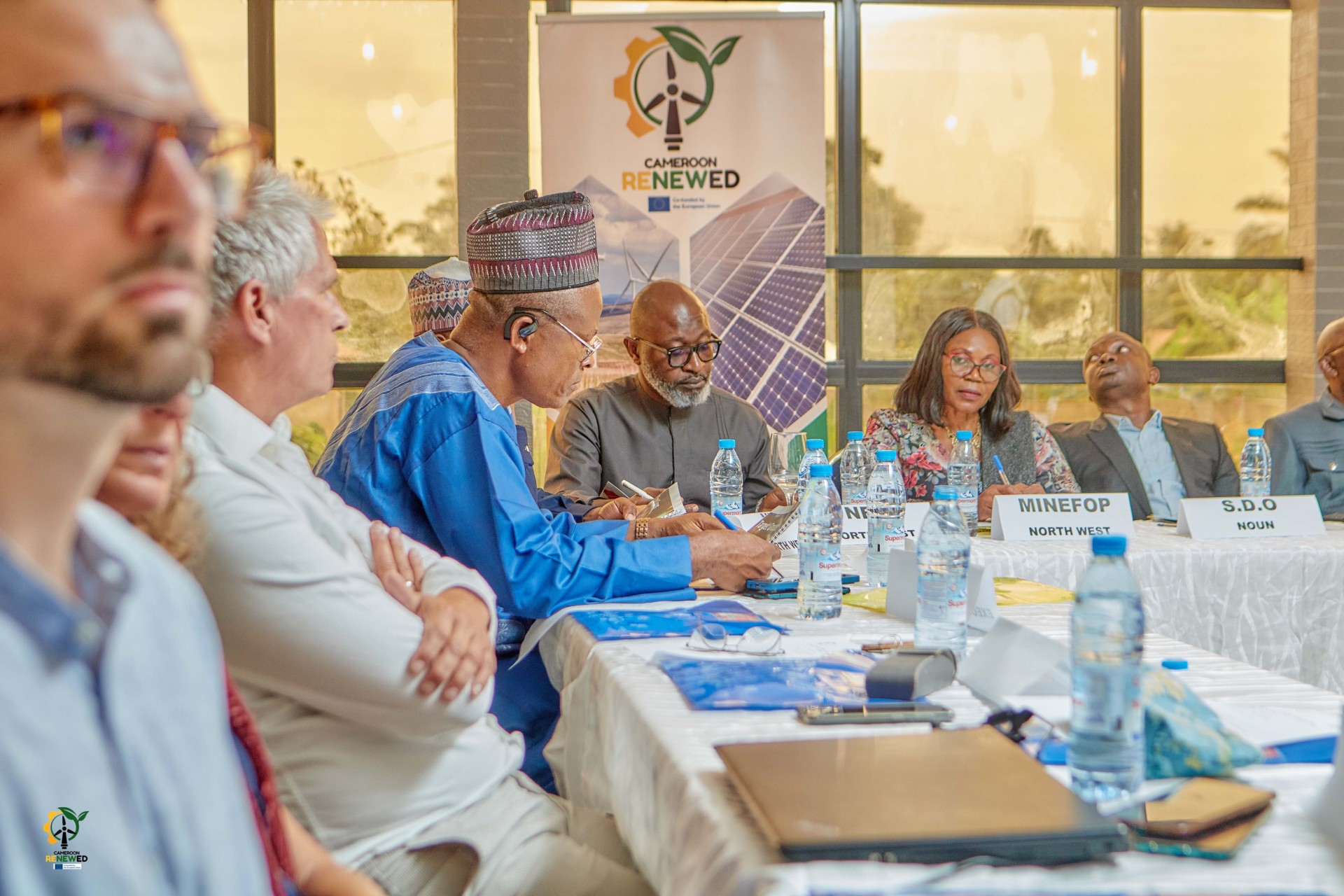
H4BF supports environmental awareness, community participation, research engagement and evidence-based advocacy. Recently, H4BF attended a presentation of climate research findings in Bamenda following an invitation from the Archbishop of Bamenda, to witness research examining climate change and its effects on local communities.
We believe stronger collaboration between communities, researchers, local authorities, development institutions and civil society is essential to effective climate action.
From Community Projects to Greater Impact
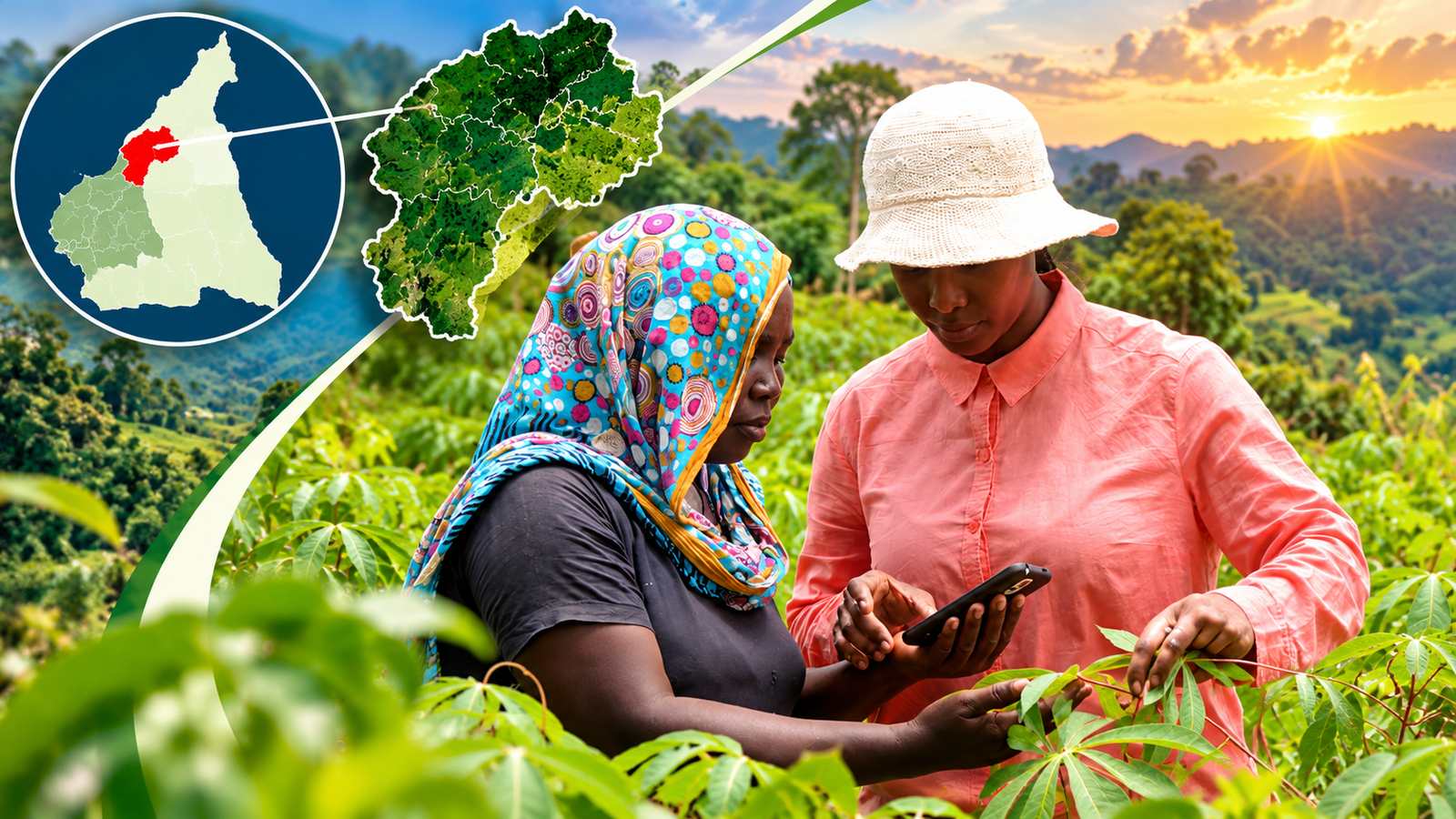
H4BF is advancing practical initiatives that connect environmental protection with livelihoods and agricultural productivity.
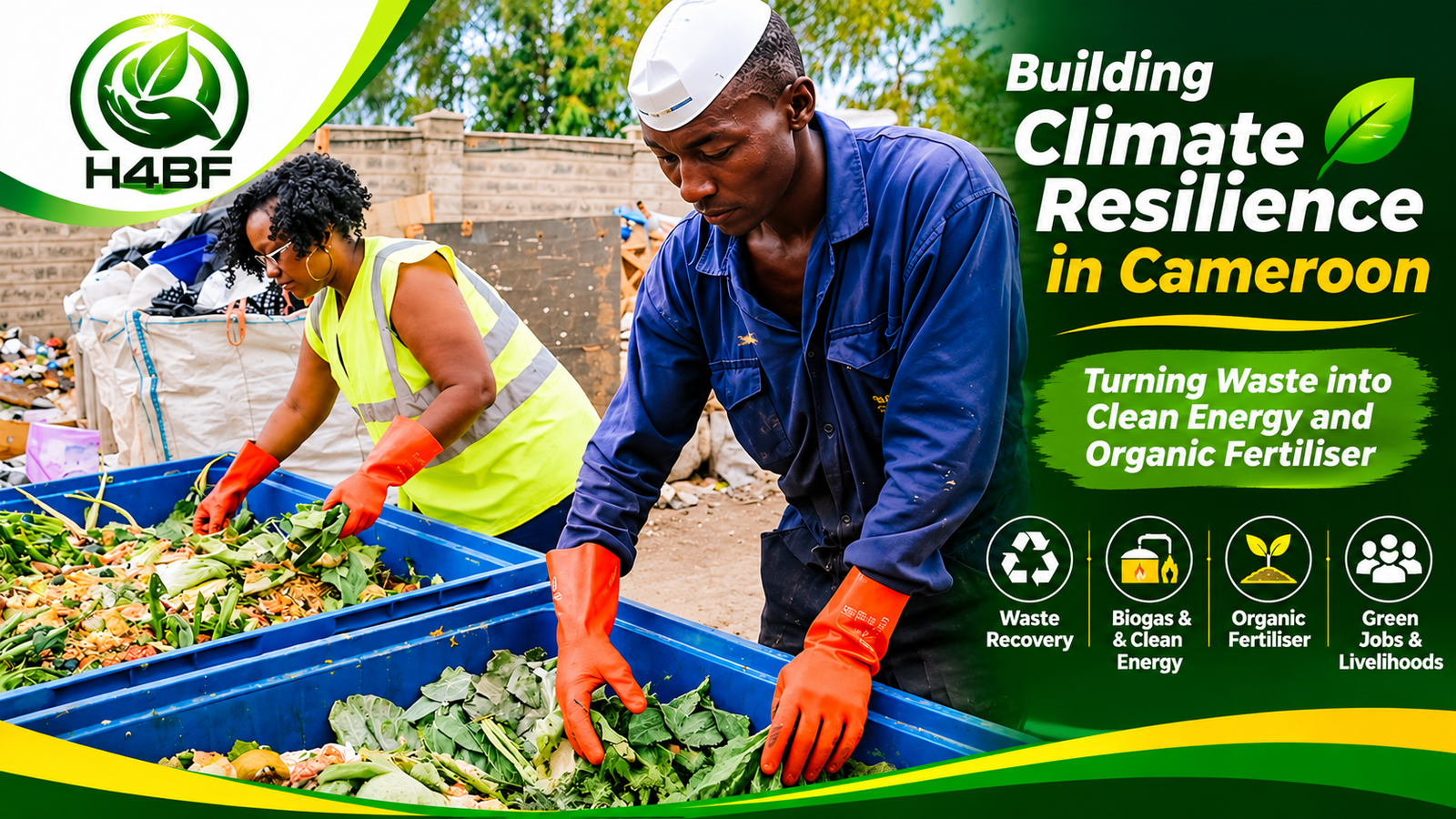
The Green Hills Organic Waste Recovery and Biofertiliser Production initiative aims to divert 1,200 tonnes of organic waste, produce 600 tonnes of compost and biofertiliser, train 150 women and young people, and support 500 farmers over 24 months.
By transforming organic waste into valuable agricultural inputs, the initiative seeks to reduce environmental pollution, improve soil health and strengthen local food systems.
H4BF also uses its Green Environment Management Information System (GEMIS) to support the monitoring of programme activities, beneficiaries and environmental indicators. This strengthens evidence-based planning, accountability and the ability to demonstrate results to development partners.
These initiatives are connected. Clean energy, environmental sustainability, economic empowerment, community health and climate advocacy are all essential parts of building stronger communities.
Our ambition is to move from established community-level interventions to wider, measurable impact across vulnerable communities in Cameroon.
Why H4BF Needs Partners and Investment Now
The scale of climate vulnerability exceeds what local organisations can address through existing resources alone. Expanding effective solutions requires long-term financing, technical expertise, institutional partnerships and stronger support for locally led adaptation.
H4BF is calling on international foundations, bilateral development agencies, UN institutions, corporate partners, research organisations and individual supporters to invest in scaling:
- Community clean-energy infrastructure and biodigester cooperatives.
- Climate-smart agriculture, soil restoration and farmer support.
- Organic waste recovery and biofertiliser production.
- Women’s green enterprises and youth vocational training.
- Community health, education and protection services.
- Climate research, community preparedness and environmental advocacy.
H4BF is not starting from zero. We have established programmes, community relationships, implementation experience and measurable results. What is needed now is the investment and partnership to expand these solutions, reach more households and strengthen the capacity of communities to withstand climate shocks.
Join H4BF in Building a Climate-Resilient Cameroon
Climate resilience cannot wait until communities have lost their harvests, homes, incomes or livelihoods. Preparedness and investment must come first.
At Hope for A Better Future, we believe protecting the environment and improving people’s lives must go hand in hand.
We invite development partners, foundations, institutions, businesses and individual supporters to work with us to scale practical, locally led climate solutions across Cameroon.
Partner with H4BF. Invest in community resilience. Help build a better future.
Hope for A Better Future (H4BF)
Website: www.h4bf.org
Partnership enquiries: info@h4bf.org
Locally led solutions. Measurable impact. Sustainable futures.


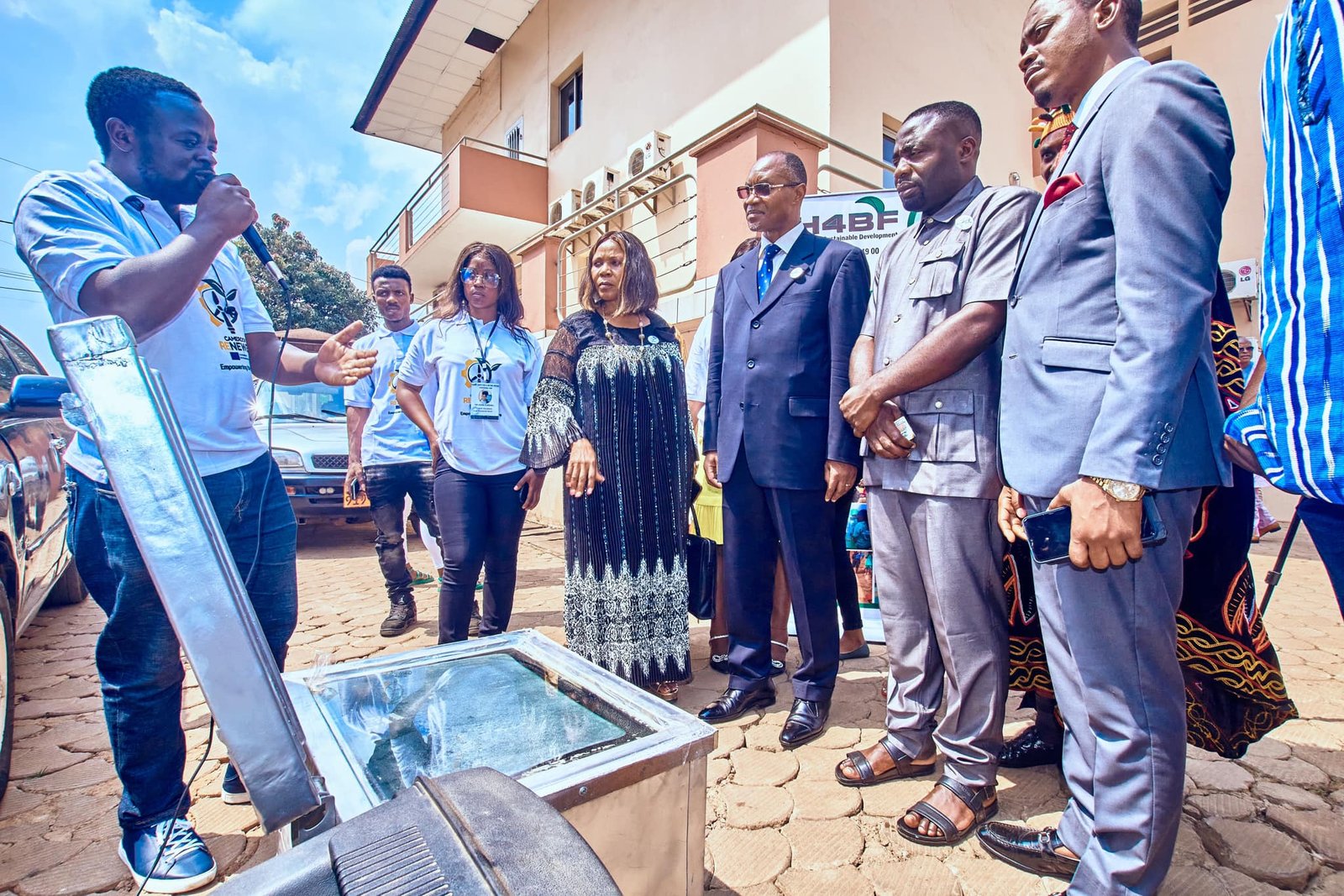

Climate resilience in Cameroon has become an urgent development priority. Changing rainfall patterns, rising temperatures, environmental degradation and increasing pressure on agricultural livelihoods are exposing vulnerable communities to growing climate risks. As El Niño develops, Hope for A Better Future (H4BF) is calling for stronger investment in clean energy, food security, environmental protection and community-led resilience.
November 2026 | Hope for A Better Future (H4BF)
The Climate Challenge: Why Cameroon Must Act Now
Climate change is no longer a distant threat. Its effects are increasingly felt through agricultural losses, pressure on household incomes, environmental degradation and growing vulnerability among rural and crisis-affected communities.
The World Meteorological Organization’s El Niño updates provide global monitoring of this climate phenomenon. Meanwhile, regional forecasts offer important information for Cameroon.
According to the Central Africa Climate Applications Centre (CAPC-AC), October 2026 climate bulletin, maximum temperatures across much of Central Africa were between 0.5°C and 1.5°C above the 1991–2020 average. Normal-to-above-normal rainfall was recorded across Cameroon’s Northwest, West and Southwest regions, among other areas.
The CAPC-AC November 2026–January 2027 seasonal forecast forecasts temperatures 1–1.5°C above normal across much of Cameroon, with normal-to-above-normal rainfall expected in the Northwest and Southwest during this period.
These forecasts do not mean every community will experience the same conditions. They highlight the importance of preparing for different risks, including intense rainfall, flooding, soil erosion, landslides, heat stress and disruption to agricultural activities.
The economic consequences are significant. According to Cameroon’s National Observatory on Climate Change (ONACC), climate-related economic losses affecting major agricultural crops were estimated at FCFA 798.26 billion in 2024. The national assessment covered all ten regions and included consultations with 5,475 farmers.
For communities dependent on farming and natural resources, these pressures threaten livelihoods, food security and economic stability. Climate resilience in Cameroon must therefore become a development and investment priority.
H4BF’s Four Areas of Action for Climate Resilience in Cameroon
H4BF believes climate resilience must go beyond environmental awareness. It must improve how people access energy, produce food, earn incomes, protect their health and manage their environment.
Our work connects four programme areas to address these challenges.
1. Clean Energy and Environmental Sustainability
Dependence on firewood and charcoal contributes to pressure on forests, household air pollution and rising energy costs. H4BF promotes renewable energy, clean cooking, biodigesters, organic waste recovery and community-based environmental enterprises.
Our reported clean-energy programme results provide an established foundation for expansion:
These results demonstrate the potential of community-based clean-energy solutions. Our priority is to extend their reach and strengthen locally owned delivery models.
Through the JAC Trust-supported Women-Led Circular Energy and Livelihood Cooperatives project, H4BF is advancing biodigester and circular-economy solutions in Bamenda, Nkambe and Magba.
The project targets 150 women engaged in cooperative livelihoods, 700 households and 100 small businesses accessing biogas, 1,200 tonnes of organic waste processed and 1,200 farmers reached over its implementation period. These are project targets, not figures presented as completed achievements.
2. Women and Youth Empowerment
Women and young people must be central to climate solutions. They need access to skills, resources, technologies and economic opportunities to adapt and build sustainable livelihoods.
Through HOBEFI, H4BF’s vocational training platform, we develop practical skills in renewable energy, information technology, smart agriculture, fashion and design, and green entrepreneurship.
Our ambition is to equip women and young people to become renewable-energy technicians, agricultural innovators, entrepreneurs and community leaders.
Investing in their skills and enterprises is an investment in stronger local economies and more resilient communities.
3. Community Health and Education
Climate pressures can intensify food insecurity, sanitation challenges and health vulnerabilities, particularly among women, children and households already experiencing hardship.
H4BF complements its environmental work through community health outreach, maternal and child health education, protection services, gender-based violence case management, child protection and education initiatives.
Our approach recognises that climate resilience requires healthy, informed communities that can protect their most vulnerable members.
4. Climate Justice and Advocacy
Communities experiencing climate impacts must have a voice in the decisions affecting their future.
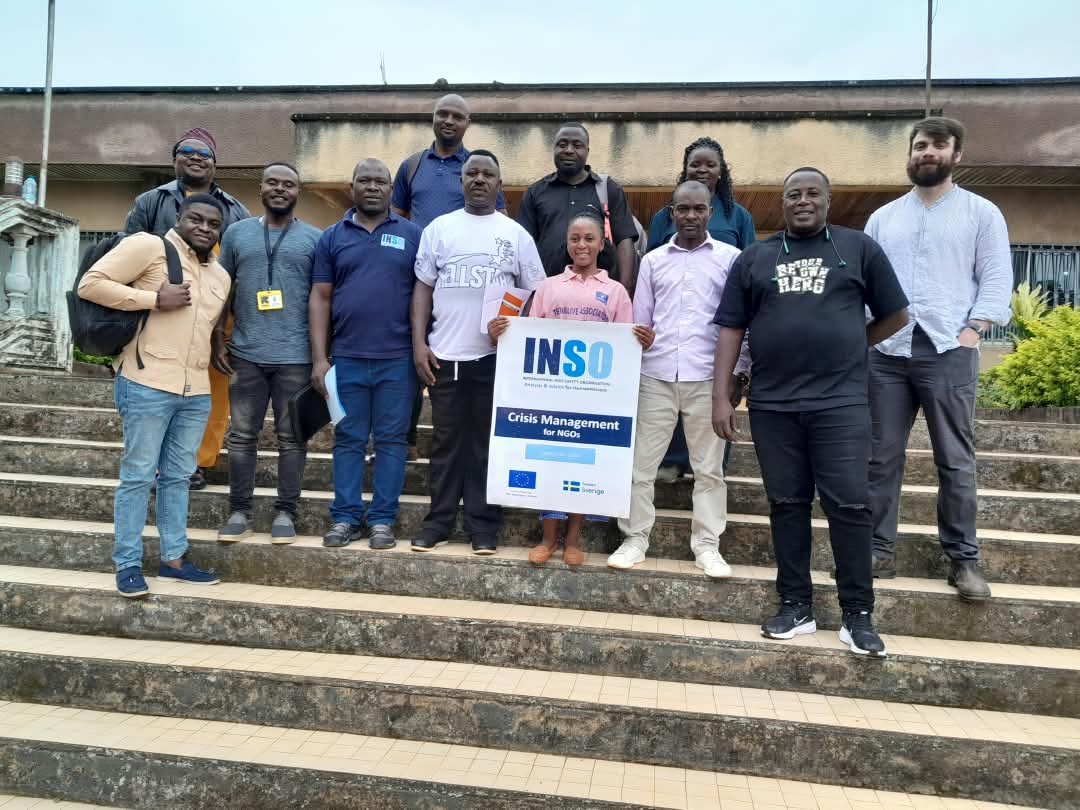
H4BF supports environmental awareness, community participation, research engagement and evidence-based advocacy. Recently, H4BF attended a presentation of climate research findings in Bamenda following an invitation from the Archbishop of Bamenda, to witness research examining climate change and its effects on local communities.
We believe stronger collaboration between communities, researchers, local authorities, development institutions and civil society is essential to effective climate action.
From Community Projects to Greater Impact
H4BF is advancing practical initiatives that connect environmental protection with livelihoods and agricultural productivity.
The Green Hills Organic Waste Recovery and Biofertiliser Production initiative aims to divert 1,200 tonnes of organic waste, produce 600 tonnes of compost and biofertiliser, train 150 women and young people, and support 500 farmers over 24 months.
By transforming organic waste into valuable agricultural inputs, the initiative seeks to reduce environmental pollution, improve soil health and strengthen local food systems.
H4BF also uses its Green Environment Management Information System (GEMIS) to support the monitoring of programme activities, beneficiaries and environmental indicators. This strengthens evidence-based planning, accountability and the ability to demonstrate results to development partners.
These initiatives are connected. Clean energy, environmental sustainability, economic empowerment, community health and climate advocacy are all essential parts of building stronger communities.
Our ambition is to move from established community-level interventions to wider, measurable impact across vulnerable communities in Cameroon.
Why H4BF Needs Partners and Investment Now
The scale of climate vulnerability exceeds what local organisations can address through existing resources alone. Expanding effective solutions requires long-term financing, technical expertise, institutional partnerships and stronger support for locally led adaptation.
H4BF is calling on international foundations, bilateral development agencies, UN institutions, corporate partners, research organisations and individual supporters to invest in scaling:
H4BF is not starting from zero. We have established programmes, community relationships, implementation experience and measurable results. What is needed now is the investment and partnership to expand these solutions, reach more households and strengthen the capacity of communities to withstand climate shocks.
Join H4BF in Building a Climate-Resilient Cameroon
Climate resilience cannot wait until communities have lost their harvests, homes, incomes or livelihoods. Preparedness and investment must come first.
At Hope for A Better Future, we believe protecting the environment and improving people’s lives must go hand in hand.
We invite development partners, foundations, institutions, businesses and individual supporters to work with us to scale practical, locally led climate solutions across Cameroon.
Partner with H4BF. Invest in community resilience. Help build a better future.
Hope for A Better Future (H4BF)
Website: www.h4bf.org
Partnership enquiries: info@h4bf.org
Locally led solutions. Measurable impact. Sustainable futures.
Share This:
H4BF