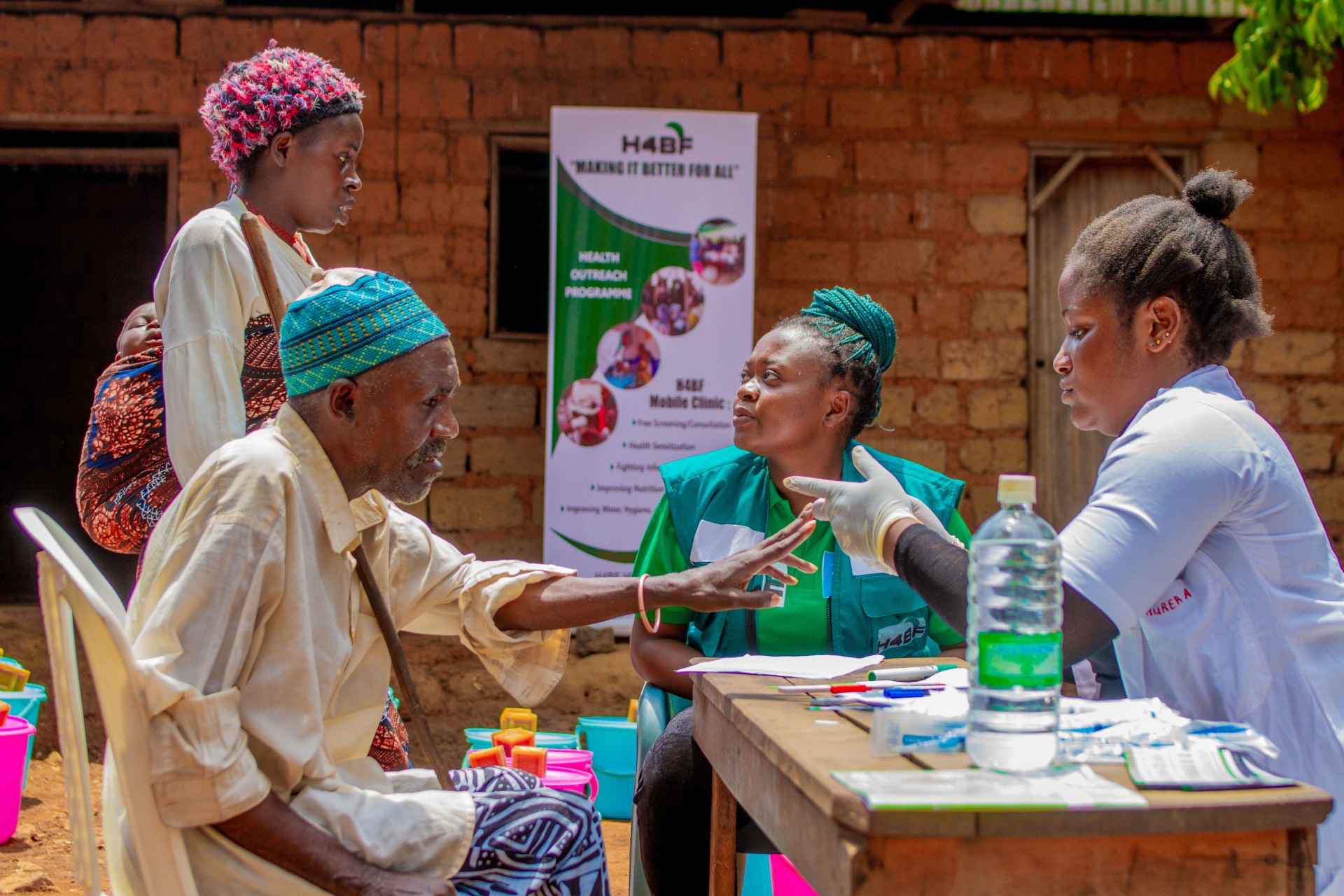
From healthier soils to cleaner energy, Hope for A Better Future is helping communities in Cameroon’s North-West and West Regions build a better future.
Regions: North-West and West Regions, Cameroon Organisation: Hope for A Better Future (H4BF)
What happens when the rains no longer come when farmers expect them? What happens when heavy rainfall washes away fertile soil, crops struggle to grow, or families find it harder to produce enough food?
For many farming communities, these are important questions. The weather affects what people plant, how much they harvest and how much money they earn to support their families.
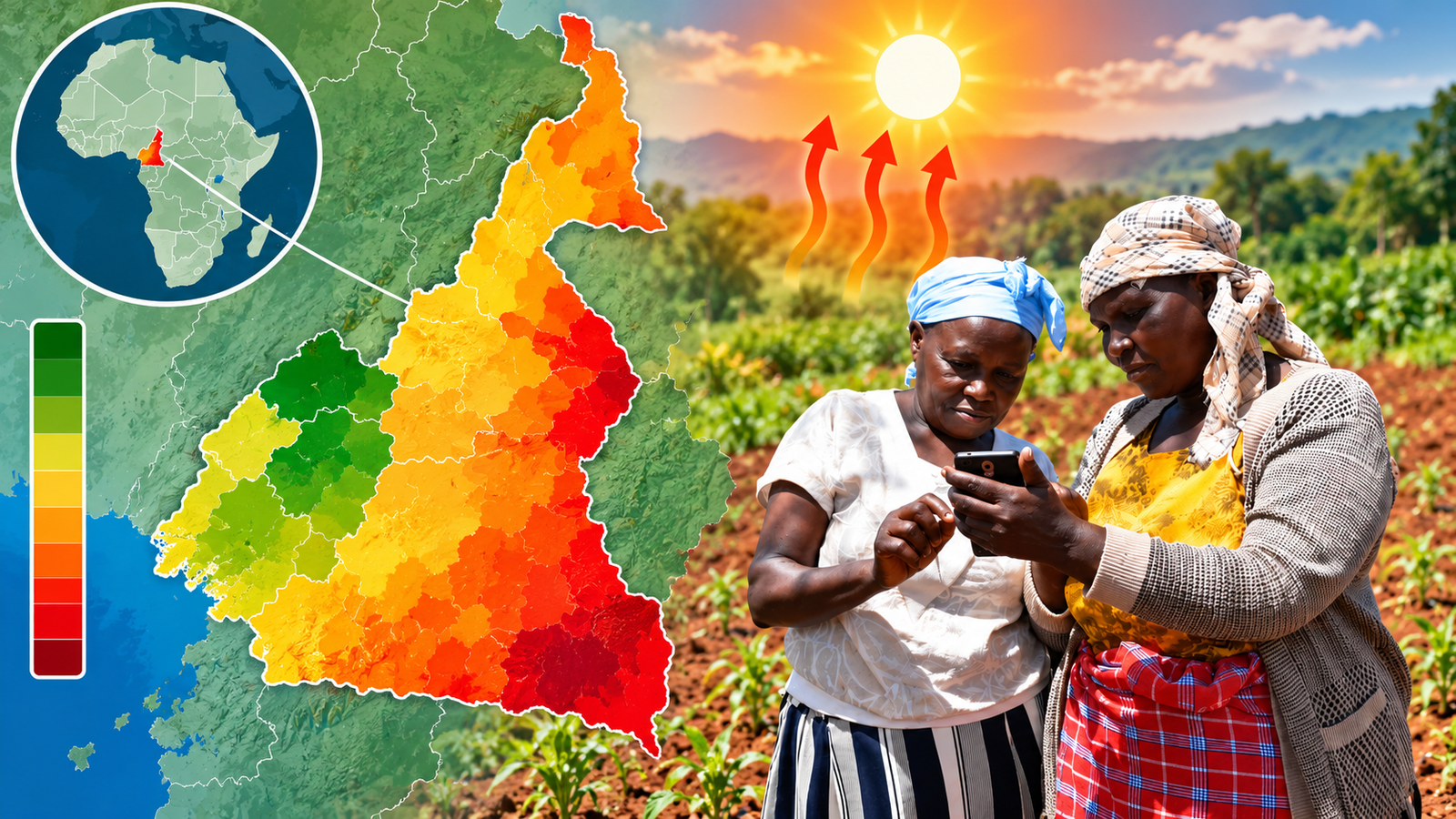
Climate change is making these challenges more important. According to the World Bank’s Climate Change Knowledge Portal, Cameroon is expected to become warmer in the coming decades. Although it is difficult to predict exactly how rainfall will change in every community, preparing for these changes is becoming increasingly important.
At Hope for A Better Future (H4BF), we believe that protecting our environment must go hand in hand with improving people’s lives.
That is why our work in agriculture, renewable energy, waste management, vocational training and community development matters.
Across our intervention areas in the North-West and West Regions, we see an opportunity to help communities protect their livelihoods, improve food production and create new opportunities for women and young people.
When the climate changes, farmers feel it first
Imagine a farmer who prepares the land, buys seeds and spends weeks caring for a crop, only to face an unexpected dry spell or heavy rainfall that damages the harvest.
For a family that depends on farming, a poor harvest can mean less food on the table, less money for school fees and greater difficulty meeting everyday needs.
Changes in rainfall can make it harder for farmers to know when to plant. Rising temperatures can increase the amount of water crops need. Heavy rainfall can wash away valuable topsoil, while dry periods can leave crops struggling for water.
These challenges matter in both the North-West and West Regions, where farming supports many families.
But there is hope. By improving the way we manage our land, soil, water and other resources, we can help communities become better prepared for a changing climate.
This is where H4BF’s work comes in.
Turning waste into something valuable for farmers
What if the waste we throw away every day could help us grow better food?
This is the idea behind H4BF’s Green Hills Organic Waste Recovery and Biofertiliser Production initiative in Muwom, Akum, in the North-West Region.
Every day, organic waste is produced in markets, homes and other places. When it is not properly managed, it can create environmental problems. Yet much of this waste can become a valuable resource.
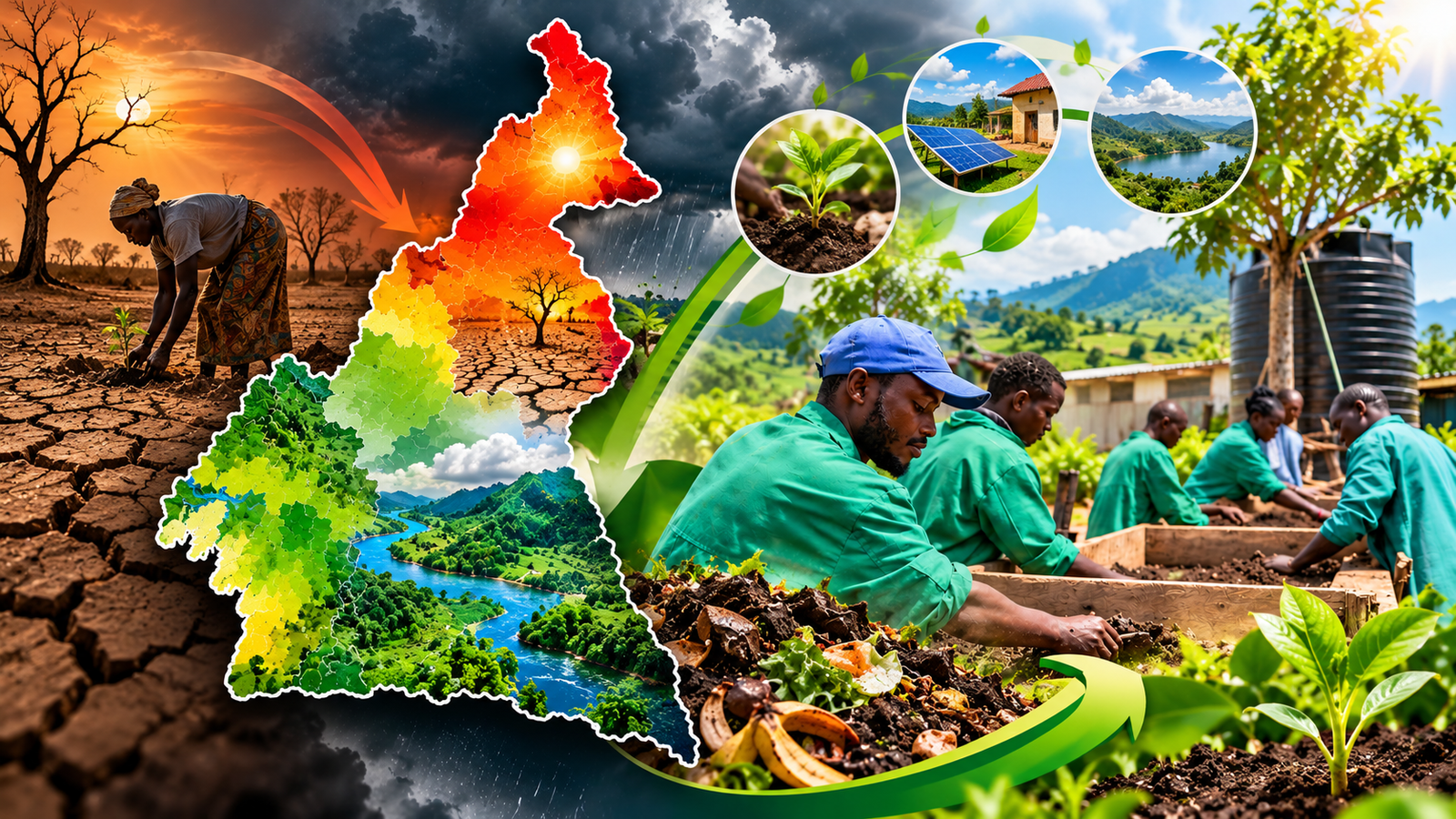
Through Green Hills, H4BF is working to promote waste sorting, collection and the transformation of organic waste into compost and biofertiliser.
Instead of allowing useful organic materials to go to waste, we can return valuable nutrients to the soil and support farmers in improving their land.
Good-quality compost can help improve soil structure, increase soil organic matter and support the soil’s ability to hold moisture. When combined with good farming practices, it can help farmers care for their land and maintain productive soils.
This is especially important as communities prepare for changing rainfall patterns and warmer conditions.
For H4BF, waste is not simply something to throw away. It can become a resource that supports farming, protects the environment and creates jobs.
The benefits go beyond farming. Waste collection, compost production and distribution can also create opportunities for women, young people and local entrepreneurs to earn an income.
Helping families grow food and build better livelihoods
Food is one of our most basic needs. Yet producing enough food becomes more difficult when farmers face poor soils, unpredictable rainfall and rising production costs.
Through initiatives such as Green Food Basket, H4BF seeks to connect food production with sustainable livelihoods, particularly for vulnerable people, including displaced women and young people.
We believe that people need more than training alone. They need practical skills, opportunities to produce food and ways to earn an income from their work.
By promoting compost use, better soil management, crop diversification and appropriate water-saving practices, we can help farmers explore ways to make their production more resilient.
The aim is simple: help people grow food, strengthen their livelihoods and become better prepared for environmental and economic challenges.
These approaches can be adapted to the needs of communities in both the North-West and West Regions.
Clean energy can open new doors for young people
Climate action is not only about farming and protecting the soil. It is also about how we produce and use energy.
Reliable electricity can help small businesses operate, support food processing and create opportunities for people to earn a living.
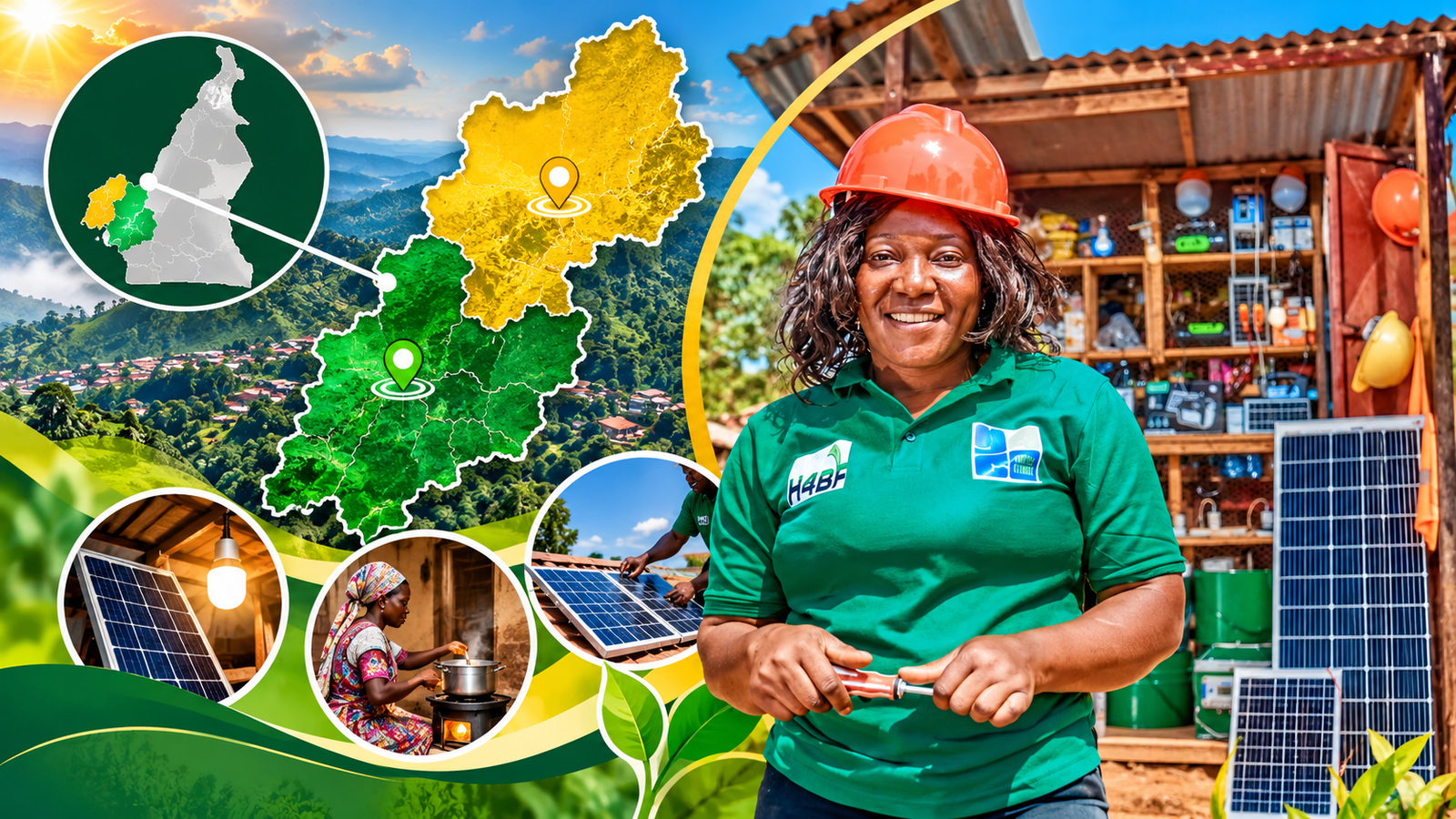
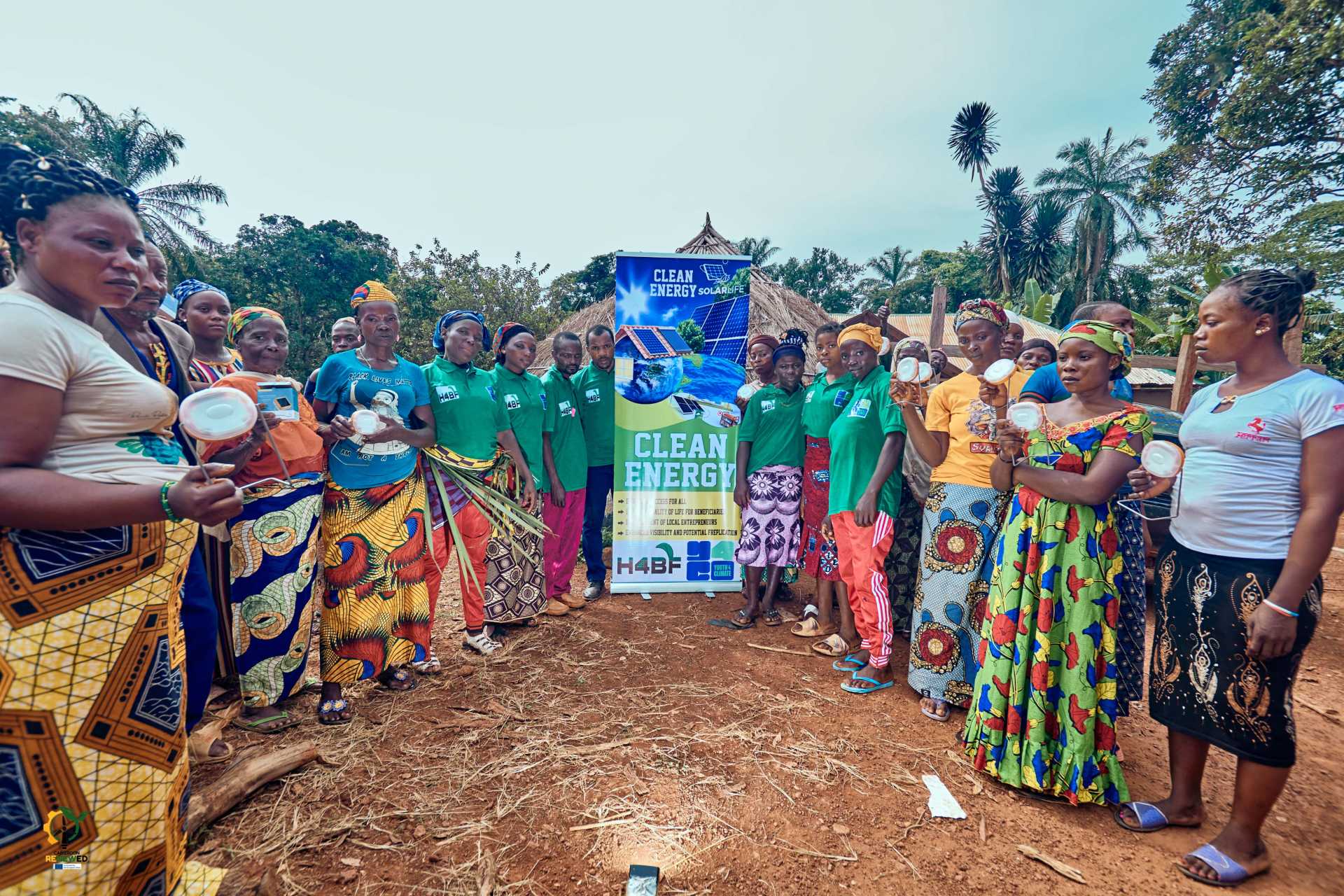
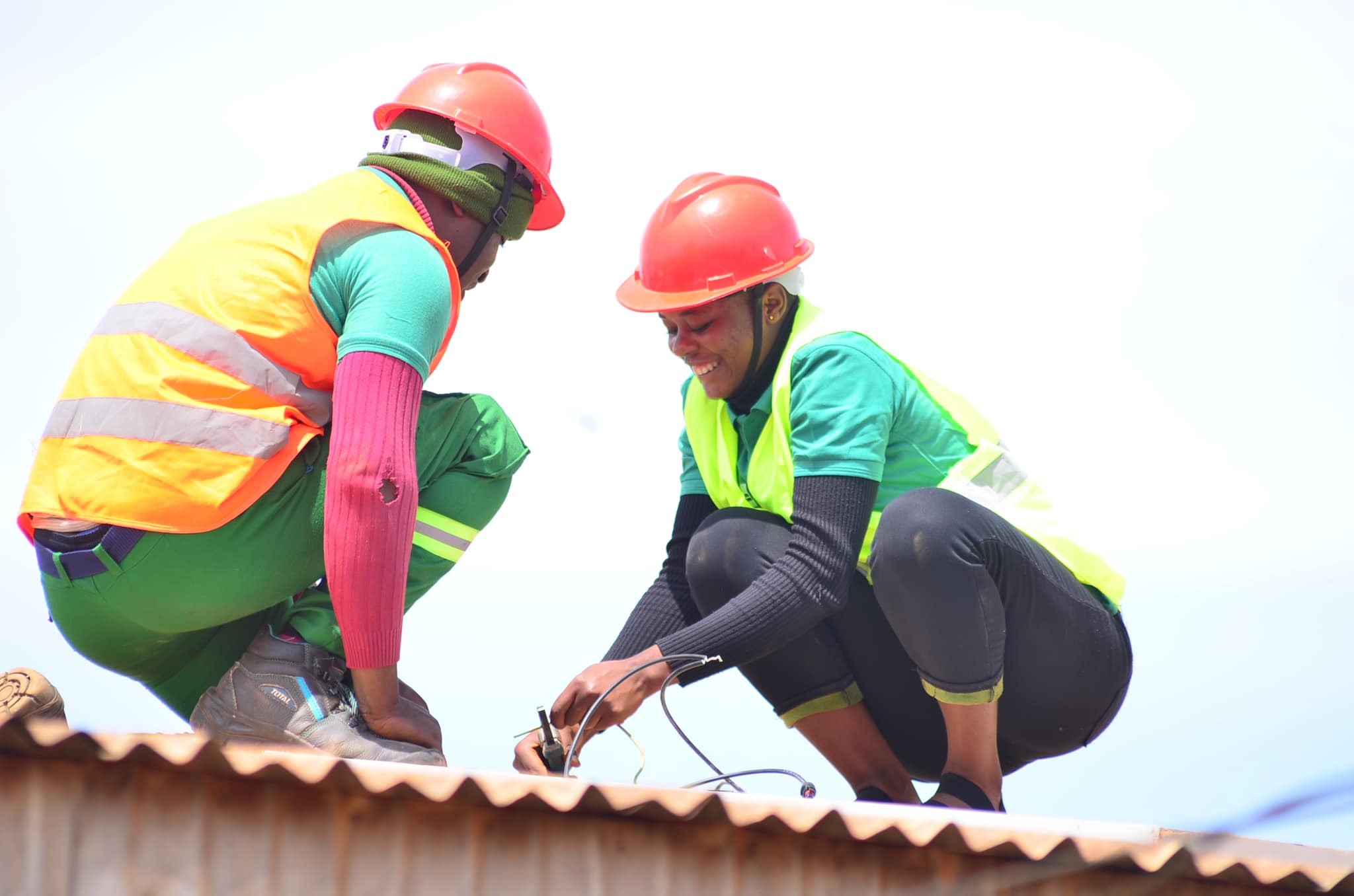
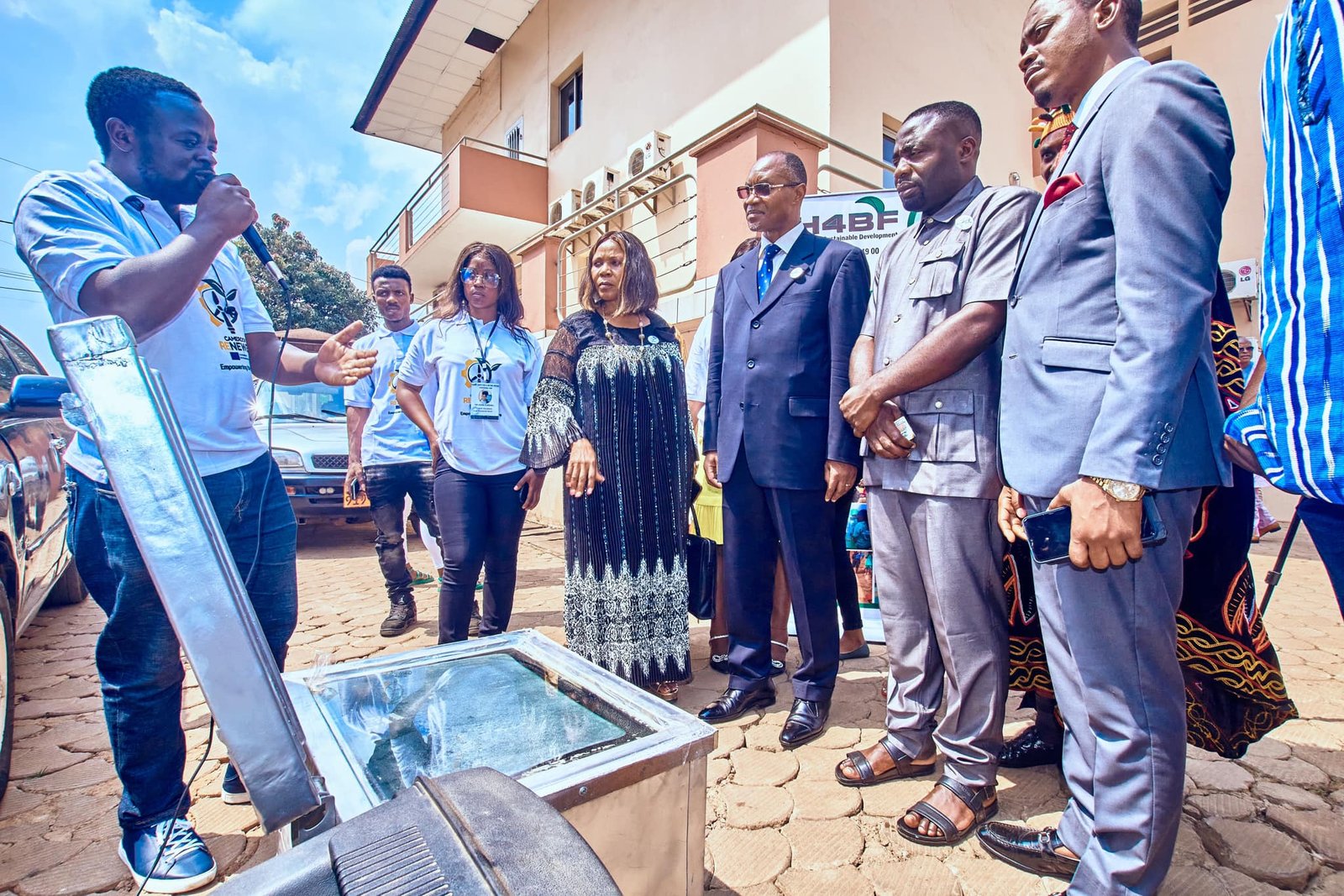
Through our renewable energy and vocational training programmes, including the Hope for A Better Future Vocational Training Institute (HOBEFI), H4BF supports young people to develop practical skills in areas such as solar energy and other technical fields.
These skills can open doors to employment and business opportunities.
A young person trained in solar installation, for example, may be able to provide services to households, farmers and local businesses. Others may develop enterprises that support agricultural production or improve access to energy.
When solar energy replaces more polluting energy sources, it can also help reduce greenhouse gas emissions.
For H4BF, the goal is to ensure that young people are not left behind as Cameroon moves towards a greener economy. We want them to have the skills and opportunities to take part in that future.
Women must be part of the solution
Women play an important role in feeding families, managing household resources and supporting agricultural production.
However, many women face barriers to accessing land, finance, training and business opportunities.
Climate-related challenges can make these difficulties even harder to manage, particularly for women whose livelihoods depend on farming or other natural resources.
H4BF believes that women should not simply be seen as people who need help. They should also have the opportunity to lead, innovate and build successful businesses.
Activities such as compost production, food processing, sustainable farming and renewable energy services can create opportunities for women to earn an income and strengthen their economic independence.
By supporting women’s skills and participation in green businesses, we can help build communities where the benefits of climate action reach more people.
North-West and West: Local action can make a difference
Although the North-West and West Regions share some agricultural and environmental challenges, every community has its own needs.
What works well for one farming community may need to be adapted for another.
That is why local knowledge matters. Farmers understand their land. Communities know their water sources and the difficulties they face. Young people and women understand the barriers that prevent them from accessing opportunities.
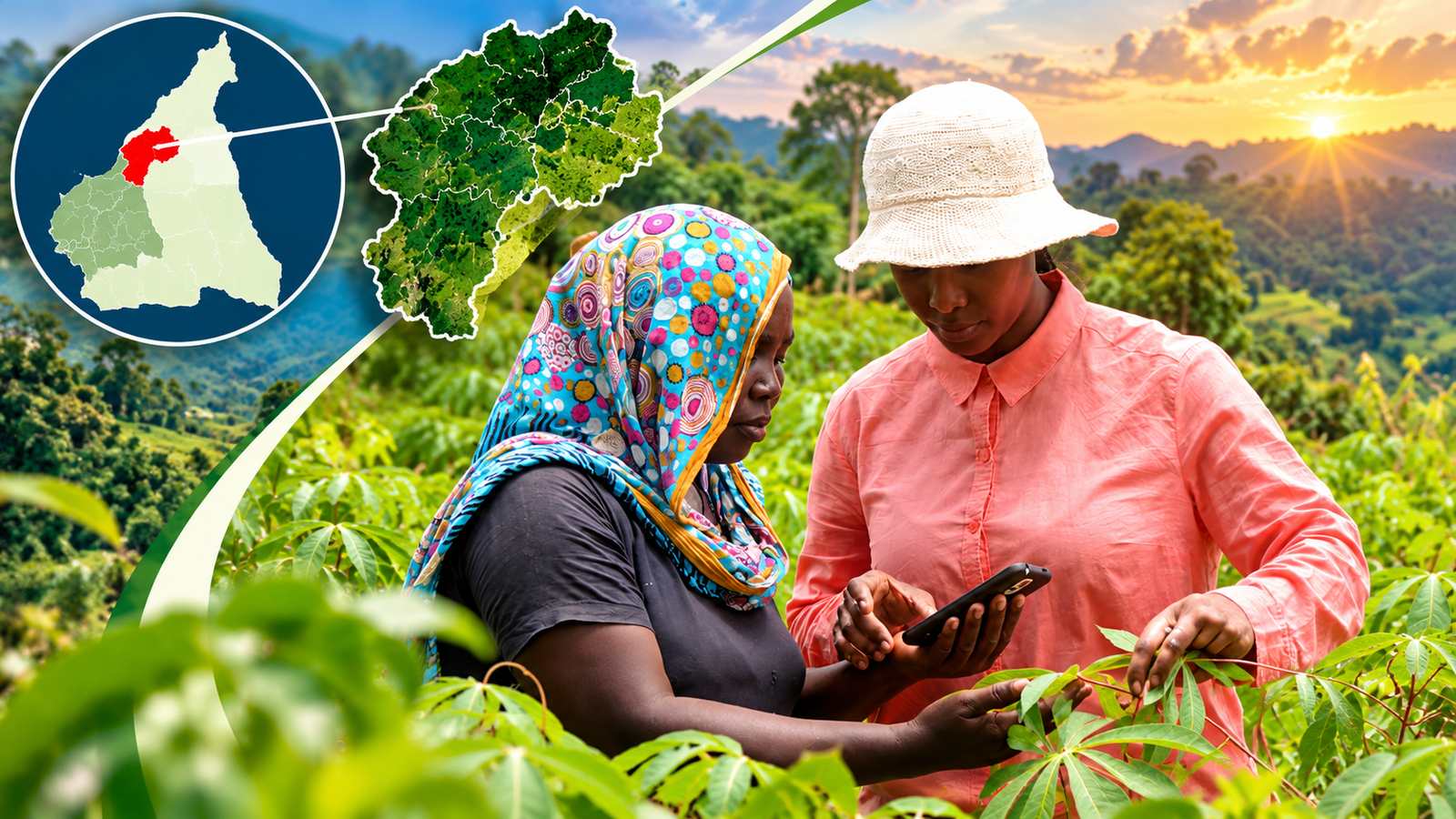
Combining this local knowledge with reliable climate information can help identify practical solutions.
For H4BF, this means supporting approaches that connect environmental protection with food security, skills development and income generation.
It also means measuring our progress, learning from experience and improving our programmes as we go.
We want to understand not only how many people participate in our activities, but also whether farmers improve their soil, whether families benefit from more reliable livelihoods and whether young people can turn their skills into productive work.
These are the changes that matter.
Looking towards 2036: The future we want to build
The coming years will be important for Cameroon’s response to climate change.
We cannot control the weather, but we can make choices today that help our communities prepare for tomorrow.
We can protect our soils, manage waste more responsibly, improve farming practices, invest in clean energy and give young people the skills to build sustainable businesses.
We can also make sure that women and vulnerable communities have a voice in decisions that affect their future.
Through Green Hills, Green Food Basket, HOBEFI and our wider community programmes, H4BF is working towards a future where environmental protection and economic opportunity go hand in hand.
Our vision is of communities where farmers have healthier soils, families have better opportunities to produce food, young people can earn a living from their skills and waste becomes a resource rather than a problem.
This future will require commitment, investment and cooperation. No single organisation can achieve it alone. But every practical step matters.
When we improve our soil, we invest in our food. When we train our young people, we invest in our future. And when we protect our environment, we protect the wellbeing of our communities.
Join H4BF in building a greener future
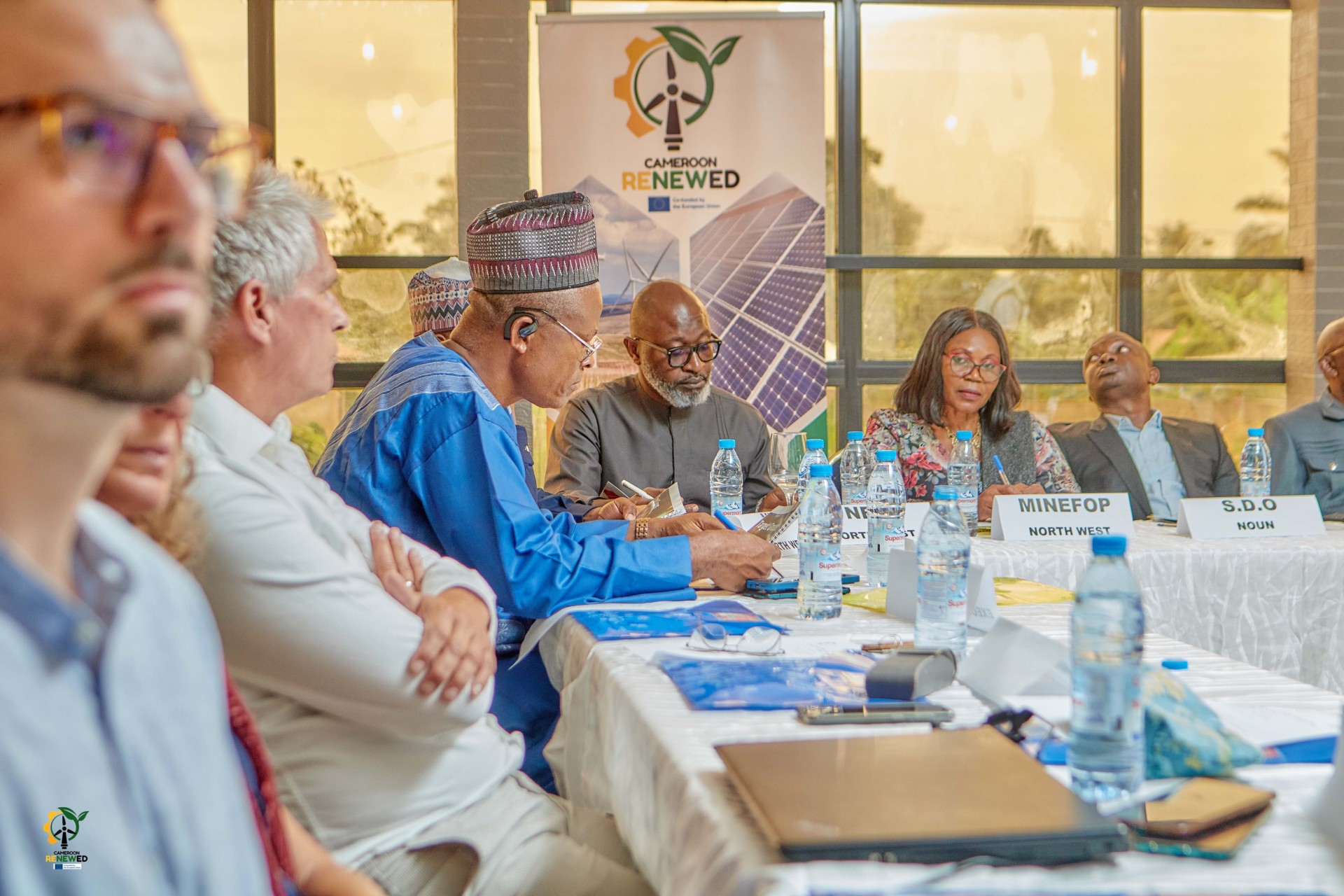
Hope for A Better Future invites development partners, local authorities, farmers, businesses, research institutions and other organisations to work with us to strengthen climate resilience in Cameroon’s North-West and West Regions.
Together, we can support sustainable agriculture, transform organic waste into useful products, expand renewable energy skills and create opportunities for women and young people.
Climate change is a challenge, but it is also a call to act, learn and work together.
At H4BF, we believe a better future is possible when we start building it today.
Learn more
H4BF website: www.h4bf.org
Climate information source: World Bank Climate Change Knowledge Portal — Cameroon
About H4BF: Hope for A Better Future (H4BF) is a Cameroon-based nonprofit organisation working to empower women and girls, improve health, reduce hunger and help vulnerable communities overcome adversity. Through vocational training, renewable energy, sustainable agriculture, environmental initiatives and community development, H4BF works to create opportunities and build stronger communities



From healthier soils to cleaner energy, Hope for A Better Future is helping communities in Cameroon’s North-West and West Regions build a better future.
Regions: North-West and West Regions, Cameroon Organisation: Hope for A Better Future (H4BF)
What happens when the rains no longer come when farmers expect them? What happens when heavy rainfall washes away fertile soil, crops struggle to grow, or families find it harder to produce enough food?
For many farming communities, these are important questions. The weather affects what people plant, how much they harvest and how much money they earn to support their families.
Climate change is making these challenges more important. According to the World Bank’s Climate Change Knowledge Portal, Cameroon is expected to become warmer in the coming decades. Although it is difficult to predict exactly how rainfall will change in every community, preparing for these changes is becoming increasingly important.
At Hope for A Better Future (H4BF), we believe that protecting our environment must go hand in hand with improving people’s lives.
That is why our work in agriculture, renewable energy, waste management, vocational training and community development matters.
Across our intervention areas in the North-West and West Regions, we see an opportunity to help communities protect their livelihoods, improve food production and create new opportunities for women and young people.
When the climate changes, farmers feel it first
Imagine a farmer who prepares the land, buys seeds and spends weeks caring for a crop, only to face an unexpected dry spell or heavy rainfall that damages the harvest.
For a family that depends on farming, a poor harvest can mean less food on the table, less money for school fees and greater difficulty meeting everyday needs.
Changes in rainfall can make it harder for farmers to know when to plant. Rising temperatures can increase the amount of water crops need. Heavy rainfall can wash away valuable topsoil, while dry periods can leave crops struggling for water.
These challenges matter in both the North-West and West Regions, where farming supports many families.
But there is hope. By improving the way we manage our land, soil, water and other resources, we can help communities become better prepared for a changing climate.
This is where H4BF’s work comes in.
Turning waste into something valuable for farmers
What if the waste we throw away every day could help us grow better food?
This is the idea behind H4BF’s Green Hills Organic Waste Recovery and Biofertiliser Production initiative in Muwom, Akum, in the North-West Region.
Every day, organic waste is produced in markets, homes and other places. When it is not properly managed, it can create environmental problems. Yet much of this waste can become a valuable resource.
Through Green Hills, H4BF is working to promote waste sorting, collection and the transformation of organic waste into compost and biofertiliser.
Instead of allowing useful organic materials to go to waste, we can return valuable nutrients to the soil and support farmers in improving their land.
Good-quality compost can help improve soil structure, increase soil organic matter and support the soil’s ability to hold moisture. When combined with good farming practices, it can help farmers care for their land and maintain productive soils.
This is especially important as communities prepare for changing rainfall patterns and warmer conditions.
For H4BF, waste is not simply something to throw away. It can become a resource that supports farming, protects the environment and creates jobs.
The benefits go beyond farming. Waste collection, compost production and distribution can also create opportunities for women, young people and local entrepreneurs to earn an income.
Helping families grow food and build better livelihoods
Food is one of our most basic needs. Yet producing enough food becomes more difficult when farmers face poor soils, unpredictable rainfall and rising production costs.
Through initiatives such as Green Food Basket, H4BF seeks to connect food production with sustainable livelihoods, particularly for vulnerable people, including displaced women and young people.
We believe that people need more than training alone. They need practical skills, opportunities to produce food and ways to earn an income from their work.
By promoting compost use, better soil management, crop diversification and appropriate water-saving practices, we can help farmers explore ways to make their production more resilient.
The aim is simple: help people grow food, strengthen their livelihoods and become better prepared for environmental and economic challenges.
These approaches can be adapted to the needs of communities in both the North-West and West Regions.
Clean energy can open new doors for young people
Climate action is not only about farming and protecting the soil. It is also about how we produce and use energy.
Reliable electricity can help small businesses operate, support food processing and create opportunities for people to earn a living.
Through our renewable energy and vocational training programmes, including the Hope for A Better Future Vocational Training Institute (HOBEFI), H4BF supports young people to develop practical skills in areas such as solar energy and other technical fields.
These skills can open doors to employment and business opportunities.
A young person trained in solar installation, for example, may be able to provide services to households, farmers and local businesses. Others may develop enterprises that support agricultural production or improve access to energy.
When solar energy replaces more polluting energy sources, it can also help reduce greenhouse gas emissions.
For H4BF, the goal is to ensure that young people are not left behind as Cameroon moves towards a greener economy. We want them to have the skills and opportunities to take part in that future.
Women must be part of the solution
Women play an important role in feeding families, managing household resources and supporting agricultural production.
However, many women face barriers to accessing land, finance, training and business opportunities.
Climate-related challenges can make these difficulties even harder to manage, particularly for women whose livelihoods depend on farming or other natural resources.
H4BF believes that women should not simply be seen as people who need help. They should also have the opportunity to lead, innovate and build successful businesses.
Activities such as compost production, food processing, sustainable farming and renewable energy services can create opportunities for women to earn an income and strengthen their economic independence.
By supporting women’s skills and participation in green businesses, we can help build communities where the benefits of climate action reach more people.
North-West and West: Local action can make a difference
Although the North-West and West Regions share some agricultural and environmental challenges, every community has its own needs.
What works well for one farming community may need to be adapted for another.
That is why local knowledge matters. Farmers understand their land. Communities know their water sources and the difficulties they face. Young people and women understand the barriers that prevent them from accessing opportunities.
Combining this local knowledge with reliable climate information can help identify practical solutions.
For H4BF, this means supporting approaches that connect environmental protection with food security, skills development and income generation.
It also means measuring our progress, learning from experience and improving our programmes as we go.
We want to understand not only how many people participate in our activities, but also whether farmers improve their soil, whether families benefit from more reliable livelihoods and whether young people can turn their skills into productive work.
These are the changes that matter.
Looking towards 2036: The future we want to build
The coming years will be important for Cameroon’s response to climate change.
We cannot control the weather, but we can make choices today that help our communities prepare for tomorrow.
We can protect our soils, manage waste more responsibly, improve farming practices, invest in clean energy and give young people the skills to build sustainable businesses.
We can also make sure that women and vulnerable communities have a voice in decisions that affect their future.
Through Green Hills, Green Food Basket, HOBEFI and our wider community programmes, H4BF is working towards a future where environmental protection and economic opportunity go hand in hand.
Our vision is of communities where farmers have healthier soils, families have better opportunities to produce food, young people can earn a living from their skills and waste becomes a resource rather than a problem.
This future will require commitment, investment and cooperation. No single organisation can achieve it alone. But every practical step matters.
When we improve our soil, we invest in our food. When we train our young people, we invest in our future. And when we protect our environment, we protect the wellbeing of our communities.
Join H4BF in building a greener future
Hope for A Better Future invites development partners, local authorities, farmers, businesses, research institutions and other organisations to work with us to strengthen climate resilience in Cameroon’s North-West and West Regions.
Together, we can support sustainable agriculture, transform organic waste into useful products, expand renewable energy skills and create opportunities for women and young people.
Climate change is a challenge, but it is also a call to act, learn and work together.
At H4BF, we believe a better future is possible when we start building it today.
Learn more
H4BF website: www.h4bf.org
Climate information source: World Bank Climate Change Knowledge Portal — Cameroon
About H4BF: Hope for A Better Future (H4BF) is a Cameroon-based nonprofit organisation working to empower women and girls, improve health, reduce hunger and help vulnerable communities overcome adversity. Through vocational training, renewable energy, sustainable agriculture, environmental initiatives and community development, H4BF works to create opportunities and build stronger communities
Share This:
H4BF