H4BF Green Hill is a new circular-economy initiative by Hope for a Better Future (H4BF) in Bamenda, Cameroon, designed to transform waste into useful resources, create green livelihood opportunities, support farmers and contribute to a cleaner environment.
But Green Hill is about more than waste.
It is about people.
It is about young people looking for opportunities, women seeking sustainable livelihoods, farmers working to improve their soils, and communities looking for practical ways to build a cleaner and more resilient future.
At the heart of the initiative is a simple idea:
What if the waste we throw away today could help create a better tomorrow?
That is the vision behind H4BF Green Hill.
A New Beginning on Three Hectares
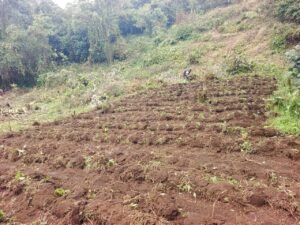
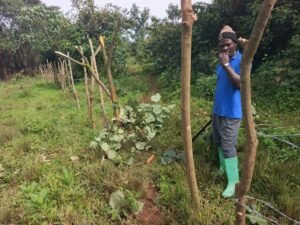
H4BF has secured approximately 3 hectares of land in Bamenda for the development of Green Hill.
The site will provide the foundation for an organic waste recovery and biofertilizer production center, with opportunities for future recycling and environmentally friendly production activities.
For H4BF, securing the land is an important first step.
The next phase is to develop the site, establish the necessary infrastructure and equipment, and build the community systems that will allow Green Hill to become a functioning circular-economy center.
The vision is to create a place where waste can be recovered and transformed, where farmers can access sustainable agricultural inputs, and where young people and women can develop practical skills and livelihoods.
Why H4BF Green Hill Matters
Waste management is a growing challenge for communities.
When organic waste is mixed with other materials and disposed of without proper recovery, valuable resources are lost. At the same time, unmanaged waste can contribute to pollution and unhealthy community environments.
Farmers also face challenges associated with soil degradation and access to affordable agricultural inputs.
Young people and women face their own challenges, particularly around employment, skills development and access to sustainable economic opportunities.
H4BF Green Hill brings these challenges together and looks for a practical response.
Instead of seeing organic waste as something with no value, H4BF sees an opportunity to recover it.
Instead of allowing nutrients to be lost, Green Hill seeks to return them to the soil.
Instead of treating environmental protection and livelihoods as separate issues, H4BF wants to create opportunities where the two reinforce each other.
Starting With the Community
The success of H4BF Green Hill will begin with communities.
H4BF plans to work with households and communities to promote simple and practical waste separation.
People will be trained to separate organic waste from plastics and other materials before collection.
Waste bins will support this process, while community education will help people understand why separating waste matters.
Once separated, suitable waste will be collected and transported to the Green Hill center for recovery and processing.
This approach recognizes an important reality:
A successful waste-recovery system begins with people.
Green Hill is therefore not simply a facility where waste will arrive.
It is a community-based system designed to help people understand that what they throw away may still have value.
Turning Organic Waste Into Biofertilizer
One of the central activities of H4BF Green Hill will be the recovery and processing of organic waste.
Suitable organic materials will be processed into compost and biofertilizer.
These products can then be made available to farmers and used to support sustainable soil-management practices.
This creates a connection between the waste generated in communities and the farms that produce food.
Instead of organic materials being lost through uncontrolled disposal, Green Hill seeks to return their value to agriculture.
The idea is simple:
Waste from communities can become a resource for farms.
Supporting Farmers and Healthier Soils
Green Hill is closely connected to H4BF’s work in agriculture and sustainable development.
Healthy soil is essential for productive and resilient farming.
Through the production of organic soil amendments and engagement with farmers, H4BF aims to promote more sustainable soil-management practices while creating a local source of agricultural inputs.
Over the initial 24-month period, H4BF is targeting support for approximately 500 farmers.
The initiative will also provide an opportunity to learn more about the effectiveness of locally produced organic inputs and their contribution to sustainable agriculture.
Giving Plastic a Second Life
Organic waste is only part of the Green Hill story.
Plastic waste is another important environmental challenge.
Through community waste separation and collection, H4BF intends to recover and store plastic materials for future recycling and production activities.
The organization is exploring opportunities to transform suitable recovered plastics into products such as pavement blocks and tiles.
The goal is to move beyond simply removing plastic from the environment.
The longer-term ambition is to turn recovered plastic into a useful raw material that can support local production and green enterprises.
Creating Opportunities for Young People
H4BF Green Hill is also a livelihoods initiative.
Young people need more than information about environmental problems.
They need practical skills, experience and opportunities to earn a living.
Green Hill can create opportunities in areas including:
-
Waste collection and logistics
-
Organic waste processing
-
Compost and biofertilizer production
-
Recycling
-
Environmental education
-
Green entrepreneurship
-
Marketing and distribution
-
Sustainable agriculture
-
Circular-economy businesses
Over the initial 24 months, H4BF aims to train and engage approximately 150 women and young people in green economic activities.
The objective is not simply to provide training certificates.
The goal is to help participants develop practical skills that can contribute to employment, entrepreneurship and income generation.
Women at the Heart of Green Hill
Women are central to H4BF’s development work, and they will also have an important role in Green Hill.
Women can participate across the emerging green value chain, including community mobilization, waste recovery, processing, marketing, agriculture and enterprise development.
H4BF wants women to participate not only as beneficiaries, but as workers, entrepreneurs, innovators and leaders within the green economy.
Green Hill therefore creates an opportunity to connect environmental sustainability with women’s economic empowerment.
A Place for Learning and Innovation
H4BF also sees Green Hill as a place where people can learn.
Young people can gain practical experience.
Farmers can learn about sustainable soil management.
Communities can learn about waste separation.
Entrepreneurs can explore new green businesses.
Researchers and technical partners can test new ideas.
Over time, Green Hill could become a practical demonstration site for circular-economy approaches adapted to the Cameroonian context.
The ambition is to learn what works, improve the model and eventually help other communities adopt similar approaches.
The Green Hill 24-Month Ambition
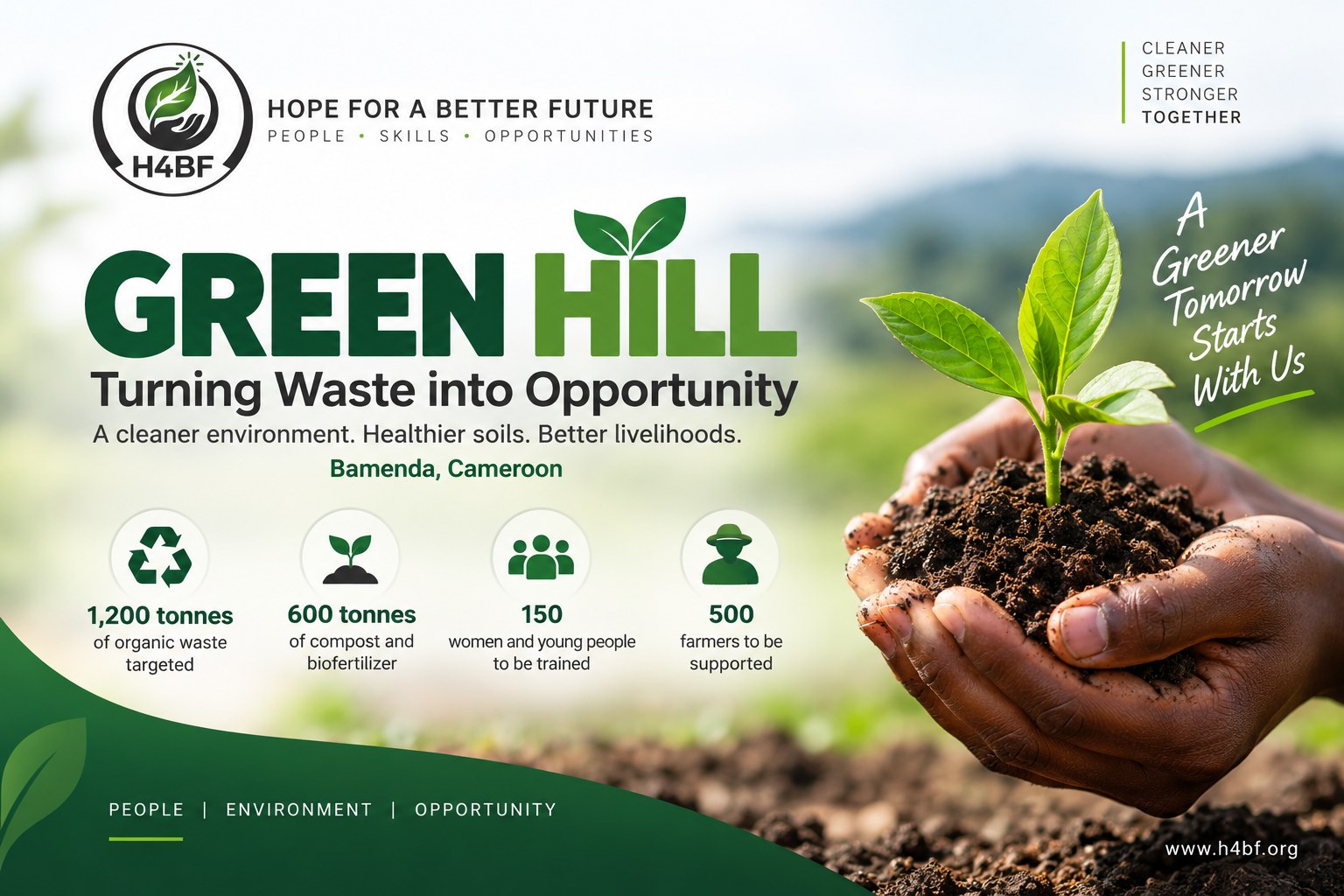
H4BF has established initial targets to guide the development of the project.
1,200 tonnes of organic waste
Targeted for diversion from uncontrolled disposal.
600 tonnes of compost and biofertilizer
Targeted for production.
150 women and young people
Targeted for training and participation in green economic activities.
500 farmers
Targeted for support through sustainable agricultural inputs and related practices.
These numbers represent more than project indicators.
Behind every tonne of waste recovered is a cleaner environment.
Behind every tonne of biofertilizer produced is an opportunity to return nutrients to the soil.
Behind every person trained is a potential livelihood.
And behind every farmer supported is an opportunity to strengthen sustainable food production.
Building on H4BF’s Experience
H4BF Green Hill is not an isolated idea.
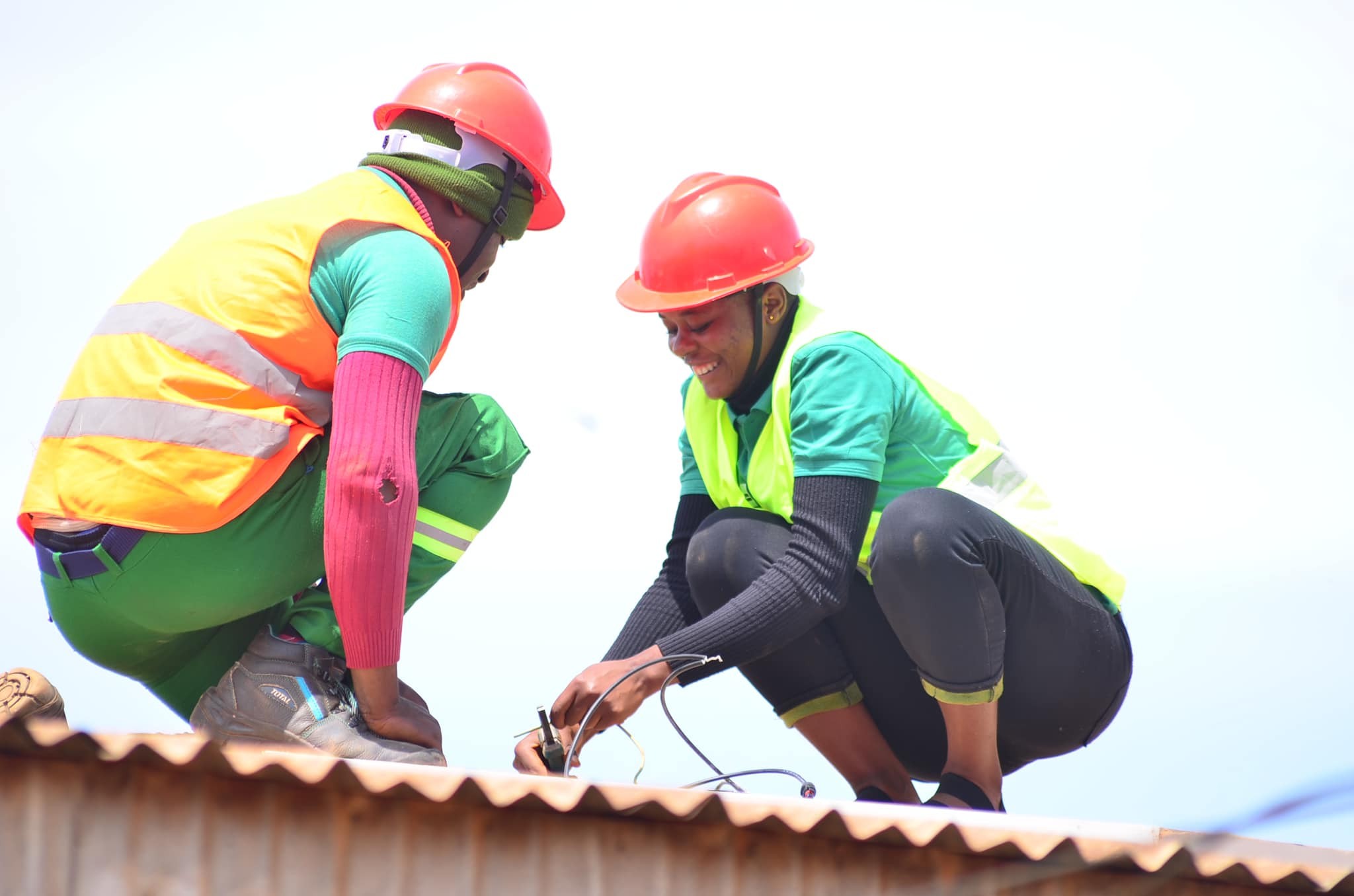
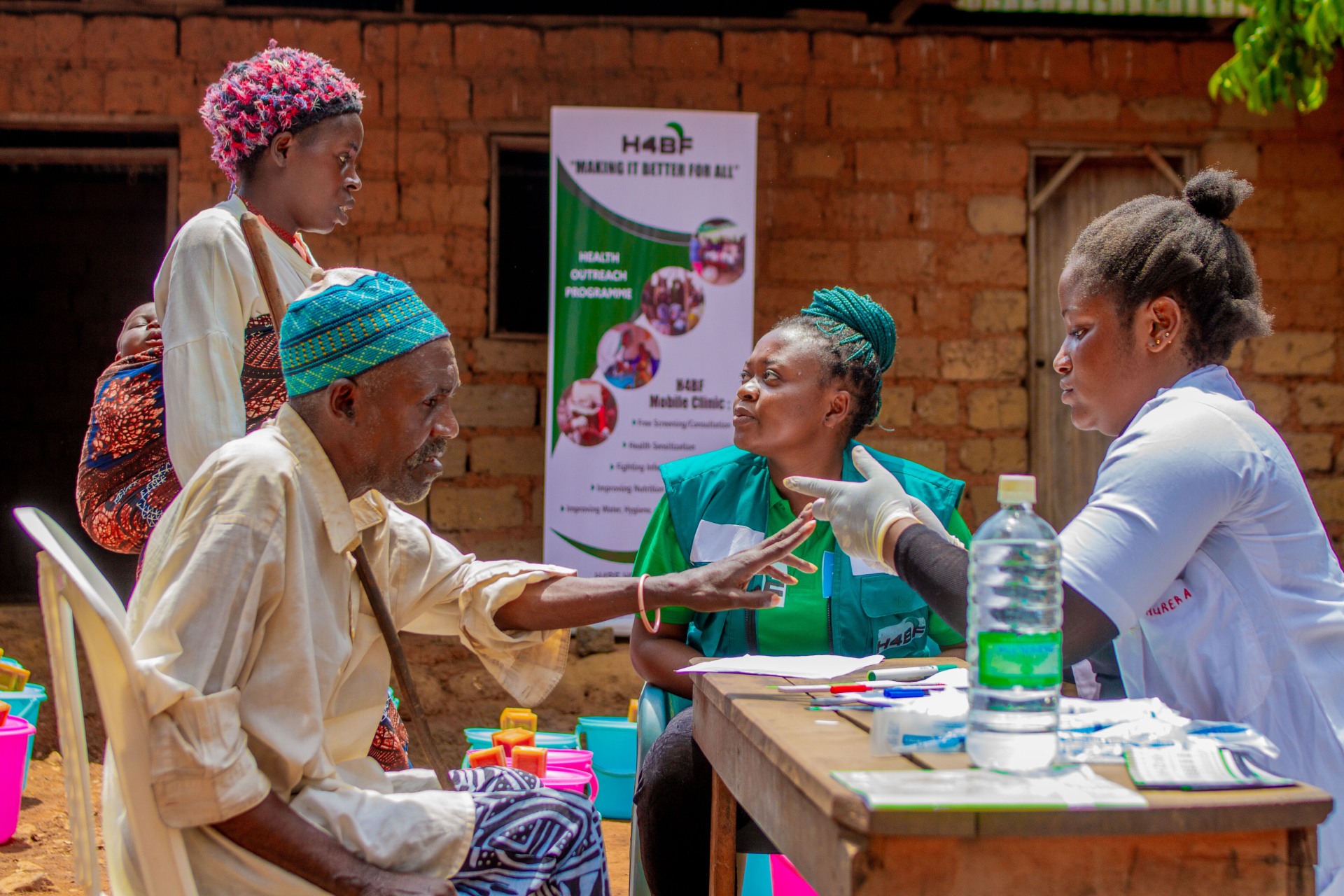
It builds on H4BF’s experience working with communities in Cameroon in areas including vocational education, renewable energy, agriculture, entrepreneurship, environmental sustainability and women’s and youth empowerment.
Through HOBEFI, the Hope for a Better Future Technical and Vocational Training Institute, H4BF provides practical training in areas including renewable energy, information technology, agriculture, fashion and entrepreneurship.
H4BF has also implemented clean-energy initiatives and worked with young people, women and communities to develop practical responses to local challenges.
Green Hill brings many of these experiences together around one question:
How can environmental challenges become opportunities for people?
Building Something That Can Last
H4BF wants Green Hill to become more than a project that exists only for the duration of a grant.
The long-term vision is to develop a center capable of generating environmental, agricultural and economic value.
Farmers can become customers for biofertilizer.
Young people can develop green enterprises.
Women can build businesses.
Communities can participate in waste recovery.
Partners can bring technology, expertise and investment.
And the products generated through the initiative can contribute to the financial sustainability of the center.
The ambition is to build a model that can grow.
What H4BF Needs to Make Green Hill a Reality
H4BF has taken an important first step by securing the land.
The next phase requires investment in the infrastructure, equipment, systems and people needed to make the center operational.
H4BF is seeking partnerships in areas such as:
-
Community waste bins and collection systems
-
Access-road development
-
Organic waste processing equipment
-
Compost and biofertilizer production
-
Plastic recovery and recycling
-
Training for women and young people
-
Green enterprise development
-
Farmer engagement
-
Soil testing and research
-
Environmental monitoring
-
Technical expertise
-
Market development
Partnership does not have to mean financial support alone.
H4BF welcomes organizations that can contribute technology, equipment, expertise, research, market connections, training or long-term collaboration.
A Shared Opportunity
We believe communities should not have to choose between protecting the environment and creating livelihoods.
The two can work together.
A cleaner community can create economic opportunities.
Healthier soil can support a farmer’s livelihood.
A young person with practical green skills can build a business.
A woman with access to training and opportunity can become an entrepreneur.
And waste that once created a problem can become part of the solution.
That is the opportunity at the heart of H4BF Green Hill.
Looking Ahead
H4BF’s ambition is for Green Hill to become a practical example of how environmental sustainability and human development can work together.
We want to demonstrate that circular-economy solutions can be developed at community level.
We want to create opportunities for women and young people.
We want to support farmers with locally produced agricultural inputs.
We want to reduce the amount of waste that is lost or poorly managed.
And we want to develop a model that can eventually be adapted to other communities in Cameroon.
Green Hill: A Better Future Starts With What We Have
We often think of development as requiring something new.
New infrastructure.
New resources.
New technologies.
But sometimes the first step is learning to see the value in what we already have.
The organic waste in our homes.
The plastic in our communities.
The land available to us.
The knowledge of our farmers.
The energy of our young people.
The determination of our women.
H4BF Green Hill brings these resources together.
We are turning waste into opportunity.
We are creating pathways to green livelihoods.
We are supporting healthier soils.
And we are working toward a cleaner and more resilient future for Cameroon.
Join H4BF in Building Green Hill
H4BF welcomes foundations, companies, development organizations, research institutions, government partners, technical organizations and individuals who share this vision.
Whether through funding, equipment, technology, expertise, research, market access or long-term partnership, there is a role to play in building Green Hill.
Together, we can build cleaner communities, healthier soils and better opportunities for the people of Cameroon.
GREEN HILL
Hope for a Better Future (H4BF)
Bamenda, Northwest Region, Cameroon
Turning Waste into Opportunity.
Restoring Soils.
Creating Green Livelihoods.



H4BF Green Hill is a new circular-economy initiative by Hope for a Better Future (H4BF) in Bamenda, Cameroon, designed to transform waste into useful resources, create green livelihood opportunities, support farmers and contribute to a cleaner environment.
But Green Hill is about more than waste.
It is about people.
It is about young people looking for opportunities, women seeking sustainable livelihoods, farmers working to improve their soils, and communities looking for practical ways to build a cleaner and more resilient future.
At the heart of the initiative is a simple idea:
That is the vision behind H4BF Green Hill.
A New Beginning on Three Hectares
H4BF has secured approximately 3 hectares of land in Bamenda for the development of Green Hill.
The site will provide the foundation for an organic waste recovery and biofertilizer production center, with opportunities for future recycling and environmentally friendly production activities.
For H4BF, securing the land is an important first step.
The next phase is to develop the site, establish the necessary infrastructure and equipment, and build the community systems that will allow Green Hill to become a functioning circular-economy center.
The vision is to create a place where waste can be recovered and transformed, where farmers can access sustainable agricultural inputs, and where young people and women can develop practical skills and livelihoods.
Why H4BF Green Hill Matters
Waste management is a growing challenge for communities.
When organic waste is mixed with other materials and disposed of without proper recovery, valuable resources are lost. At the same time, unmanaged waste can contribute to pollution and unhealthy community environments.
Farmers also face challenges associated with soil degradation and access to affordable agricultural inputs.
Young people and women face their own challenges, particularly around employment, skills development and access to sustainable economic opportunities.
H4BF Green Hill brings these challenges together and looks for a practical response.
Instead of seeing organic waste as something with no value, H4BF sees an opportunity to recover it.
Instead of allowing nutrients to be lost, Green Hill seeks to return them to the soil.
Instead of treating environmental protection and livelihoods as separate issues, H4BF wants to create opportunities where the two reinforce each other.
Starting With the Community
The success of H4BF Green Hill will begin with communities.
H4BF plans to work with households and communities to promote simple and practical waste separation.
People will be trained to separate organic waste from plastics and other materials before collection.
Waste bins will support this process, while community education will help people understand why separating waste matters.
Once separated, suitable waste will be collected and transported to the Green Hill center for recovery and processing.
This approach recognizes an important reality:
A successful waste-recovery system begins with people.
Green Hill is therefore not simply a facility where waste will arrive.
It is a community-based system designed to help people understand that what they throw away may still have value.
Turning Organic Waste Into Biofertilizer
One of the central activities of H4BF Green Hill will be the recovery and processing of organic waste.
Suitable organic materials will be processed into compost and biofertilizer.
These products can then be made available to farmers and used to support sustainable soil-management practices.
This creates a connection between the waste generated in communities and the farms that produce food.
Instead of organic materials being lost through uncontrolled disposal, Green Hill seeks to return their value to agriculture.
The idea is simple:
Waste from communities can become a resource for farms.
Supporting Farmers and Healthier Soils
Green Hill is closely connected to H4BF’s work in agriculture and sustainable development.
Healthy soil is essential for productive and resilient farming.
Through the production of organic soil amendments and engagement with farmers, H4BF aims to promote more sustainable soil-management practices while creating a local source of agricultural inputs.
Over the initial 24-month period, H4BF is targeting support for approximately 500 farmers.
The initiative will also provide an opportunity to learn more about the effectiveness of locally produced organic inputs and their contribution to sustainable agriculture.
Giving Plastic a Second Life
Organic waste is only part of the Green Hill story.
Plastic waste is another important environmental challenge.
Through community waste separation and collection, H4BF intends to recover and store plastic materials for future recycling and production activities.
The organization is exploring opportunities to transform suitable recovered plastics into products such as pavement blocks and tiles.
The goal is to move beyond simply removing plastic from the environment.
The longer-term ambition is to turn recovered plastic into a useful raw material that can support local production and green enterprises.
Creating Opportunities for Young People
H4BF Green Hill is also a livelihoods initiative.
Young people need more than information about environmental problems.
They need practical skills, experience and opportunities to earn a living.
Green Hill can create opportunities in areas including:
Waste collection and logistics
Organic waste processing
Compost and biofertilizer production
Recycling
Environmental education
Green entrepreneurship
Marketing and distribution
Sustainable agriculture
Circular-economy businesses
Over the initial 24 months, H4BF aims to train and engage approximately 150 women and young people in green economic activities.
The objective is not simply to provide training certificates.
The goal is to help participants develop practical skills that can contribute to employment, entrepreneurship and income generation.
Women at the Heart of Green Hill
Women are central to H4BF’s development work, and they will also have an important role in Green Hill.
Women can participate across the emerging green value chain, including community mobilization, waste recovery, processing, marketing, agriculture and enterprise development.
H4BF wants women to participate not only as beneficiaries, but as workers, entrepreneurs, innovators and leaders within the green economy.
Green Hill therefore creates an opportunity to connect environmental sustainability with women’s economic empowerment.
A Place for Learning and Innovation
H4BF also sees Green Hill as a place where people can learn.
Young people can gain practical experience.
Farmers can learn about sustainable soil management.
Communities can learn about waste separation.
Entrepreneurs can explore new green businesses.
Researchers and technical partners can test new ideas.
Over time, Green Hill could become a practical demonstration site for circular-economy approaches adapted to the Cameroonian context.
The ambition is to learn what works, improve the model and eventually help other communities adopt similar approaches.
The Green Hill 24-Month Ambition
H4BF has established initial targets to guide the development of the project.
1,200 tonnes of organic waste
Targeted for diversion from uncontrolled disposal.
600 tonnes of compost and biofertilizer
Targeted for production.
150 women and young people
Targeted for training and participation in green economic activities.
500 farmers
Targeted for support through sustainable agricultural inputs and related practices.
These numbers represent more than project indicators.
Behind every tonne of waste recovered is a cleaner environment.
Behind every tonne of biofertilizer produced is an opportunity to return nutrients to the soil.
Behind every person trained is a potential livelihood.
And behind every farmer supported is an opportunity to strengthen sustainable food production.
Building on H4BF’s Experience
H4BF Green Hill is not an isolated idea.
It builds on H4BF’s experience working with communities in Cameroon in areas including vocational education, renewable energy, agriculture, entrepreneurship, environmental sustainability and women’s and youth empowerment.
Through HOBEFI, the Hope for a Better Future Technical and Vocational Training Institute, H4BF provides practical training in areas including renewable energy, information technology, agriculture, fashion and entrepreneurship.
H4BF has also implemented clean-energy initiatives and worked with young people, women and communities to develop practical responses to local challenges.
Green Hill brings many of these experiences together around one question:
Building Something That Can Last
H4BF wants Green Hill to become more than a project that exists only for the duration of a grant.
The long-term vision is to develop a center capable of generating environmental, agricultural and economic value.
Farmers can become customers for biofertilizer.
Young people can develop green enterprises.
Women can build businesses.
Communities can participate in waste recovery.
Partners can bring technology, expertise and investment.
And the products generated through the initiative can contribute to the financial sustainability of the center.
The ambition is to build a model that can grow.
What H4BF Needs to Make Green Hill a Reality
H4BF has taken an important first step by securing the land.
The next phase requires investment in the infrastructure, equipment, systems and people needed to make the center operational.
H4BF is seeking partnerships in areas such as:
Community waste bins and collection systems
Access-road development
Organic waste processing equipment
Compost and biofertilizer production
Plastic recovery and recycling
Training for women and young people
Green enterprise development
Farmer engagement
Soil testing and research
Environmental monitoring
Technical expertise
Market development
Partnership does not have to mean financial support alone.
H4BF welcomes organizations that can contribute technology, equipment, expertise, research, market connections, training or long-term collaboration.
A Shared Opportunity
We believe communities should not have to choose between protecting the environment and creating livelihoods.
The two can work together.
A cleaner community can create economic opportunities.
Healthier soil can support a farmer’s livelihood.
A young person with practical green skills can build a business.
A woman with access to training and opportunity can become an entrepreneur.
And waste that once created a problem can become part of the solution.
That is the opportunity at the heart of H4BF Green Hill.
Looking Ahead
H4BF’s ambition is for Green Hill to become a practical example of how environmental sustainability and human development can work together.
We want to demonstrate that circular-economy solutions can be developed at community level.
We want to create opportunities for women and young people.
We want to support farmers with locally produced agricultural inputs.
We want to reduce the amount of waste that is lost or poorly managed.
And we want to develop a model that can eventually be adapted to other communities in Cameroon.
Green Hill: A Better Future Starts With What We Have
We often think of development as requiring something new.
New infrastructure.
New resources.
New technologies.
But sometimes the first step is learning to see the value in what we already have.
The organic waste in our homes.
The plastic in our communities.
The land available to us.
The knowledge of our farmers.
The energy of our young people.
The determination of our women.
H4BF Green Hill brings these resources together.
We are turning waste into opportunity.
We are creating pathways to green livelihoods.
We are supporting healthier soils.
And we are working toward a cleaner and more resilient future for Cameroon.
Join H4BF in Building Green Hill
H4BF welcomes foundations, companies, development organizations, research institutions, government partners, technical organizations and individuals who share this vision.
Whether through funding, equipment, technology, expertise, research, market access or long-term partnership, there is a role to play in building Green Hill.
Together, we can build cleaner communities, healthier soils and better opportunities for the people of Cameroon.
GREEN HILL
Hope for a Better Future (H4BF)
Bamenda, Northwest Region, Cameroon
Turning Waste into Opportunity.
Restoring Soils.
Creating Green Livelihoods.
Share This:
H4BF