How Hope for a Better Future promotes food security, climate-smart agriculture and community resilience among displaced and crisis-affected Indigenous women in Cameroon.
Growing food. Restoring dignity. Strengthening resilience.
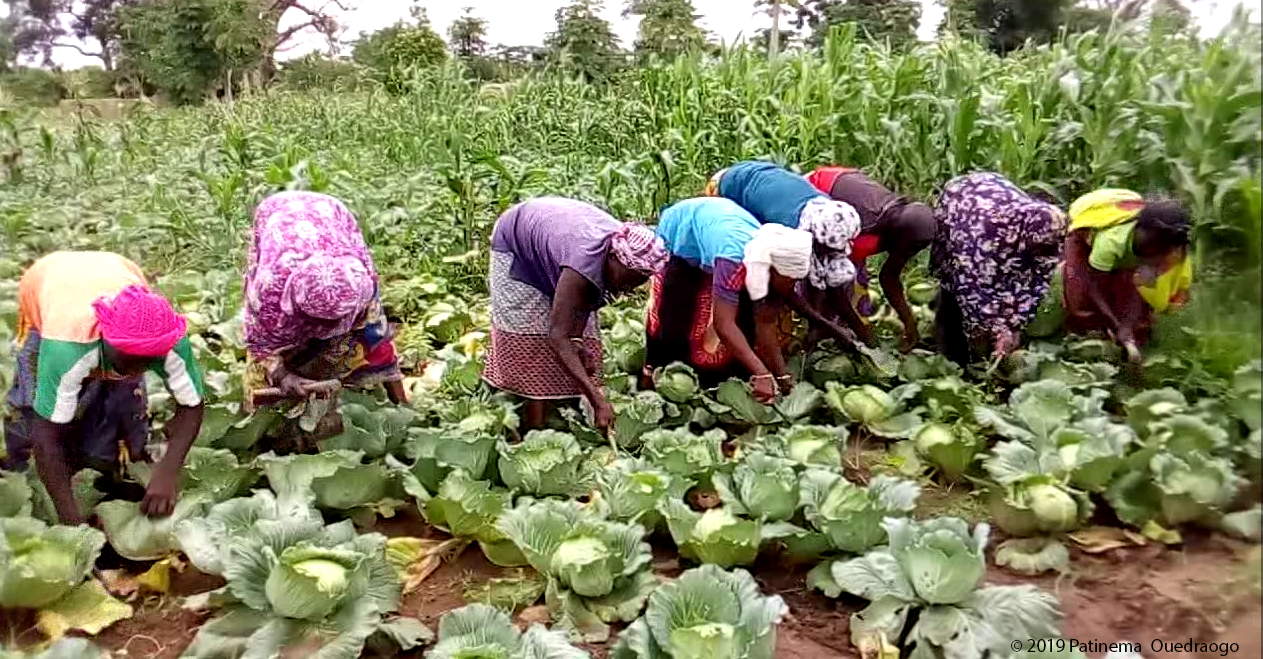
Displacement and the ongoing crisis in Cameroon’s Northwest Region have disrupted livelihoods and made it increasingly difficult for many families to sustain their food production. For Indigenous Mbororo women affected by the crisis, access to food and opportunities to maintain independent livelihoods are essential to rebuilding stability and resilience.
In response, Hope for a Better Future (H4BF) developed the Home and Community Gardens for Indigenous Women initiative in Bali Nyonga, designed to support 50 Indigenous Mbororo women’s households through home and community gardening and climate-smart food production.
The initiative recognises that women should not simply receive assistance; they should have opportunities to produce food, apply their knowledge, shape agricultural decisions and strengthen their families’ futures.
From gardening to lasting change
Home and community gardens offer a practical pathway towards improved household food production and more sustainable livelihoods. By encouraging climate-smart agricultural practices, the initiative seeks to strengthen women’s farming skills, diversify food production and build resilience in crisis-affected communities.
For H4BF, success means looking beyond the number of households reached. It means asking whether gardens remain productive, whether women adopt sustainable practices, whether families gain better access to vegetables and whether participants continue gardening after external support ends.
Measuring impact: What meaningful change looks like
H4BF’s impact framework focuses on seven measurable indicators across the 50 target households.
The following figures are illustrative targets, not verified project achievements.
- Garden establishment: 45 households (90%) establish and maintain productive gardens.
- Climate-smart agriculture: 40 households (80%) adopt at least two sustainable practices, such as mulching, compost application, crop diversification or water conservation.
- Household food access: 35 households (70%) report improved access to home-grown vegetables.
- Women’s agency: 40 women (80%) report greater participation in agricultural and household food decisions.
- Livelihood opportunities: 20 households (40%) produce surplus vegetables for sharing or sale.
- Sustained adoption: 35 households (70%) continue gardening at follow-up.
- Community knowledge-sharing: 15 women share seeds, gardening knowledge or practical techniques with others.
Together, these indicators provide a framework for assessing agricultural outputs, behaviour change, household food access, women’s decision-making and the potential for lasting community impact.
How H4BF measures change
H4BF’s proposed monitoring approach combines baseline and endline surveys of the same 50 households with garden inspections, harvest records and participant interviews. Field observations can verify functioning gardens and sustainable practices, while household records can document vegetable production, consumption and sales.
Comparing the results over time allows H4BF to calculate the proportion of households demonstrating each change. Interviews also help identify changes that conventional output reporting can overlook, including women sharing seeds, neighbours adopting gardening practices independently, stronger cooperation among participants and households continuing food production without direct project support.
These additional outcomes matter because lasting resilience depends not only on what a project delivers, but also on what communities continue doing after it ends.
Community ownership at the centre
H4BF’s approach places women’s participation and agency at the centre of sustainable food production. Community ownership means involving participants in identifying priorities, selecting appropriate crops, shaping garden activities, managing shared resources and reviewing progress.
By recognising women as active contributors to agricultural development, the initiative seeks to strengthen local knowledge, collective responsibility and the ability of communities to sustain their own food-production activities.
Building more resilient food systems in Cameroon
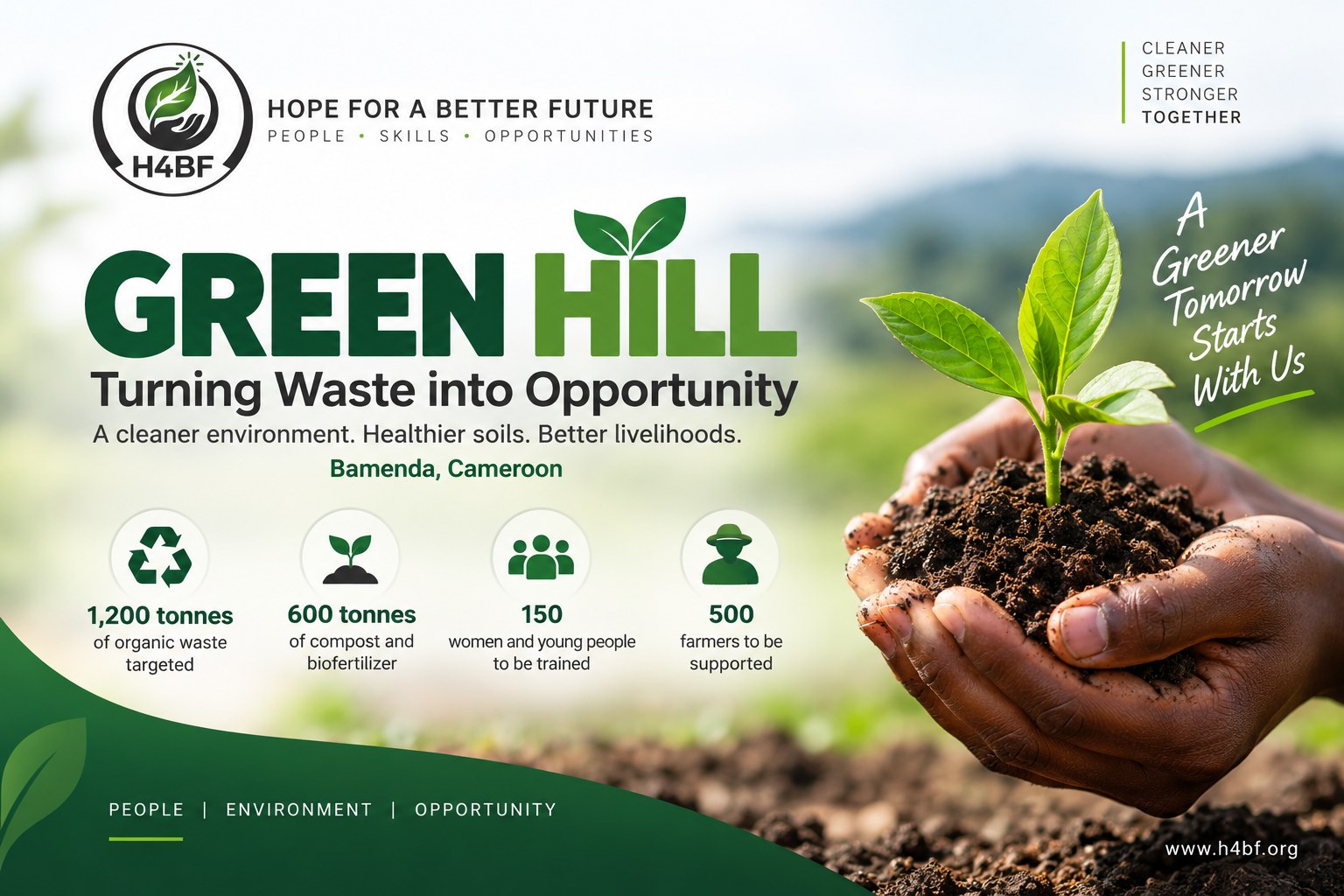
The Bali Nyonga initiative reflects H4BF’s broader commitment to women’s empowerment, food security and support for crisis-affected populations. It also connects with the organisation’s wider work on regenerative food systems, including Green Food Basket at H4BF Green Hill, which links organic-waste recovery, compost production, soil restoration and vegetable cultivation.
Through community-led agricultural initiatives, H4BF seeks to create opportunities for women and young people to strengthen their livelihoods, improve food production and contribute to more resilient local food systems.
Learn more about H4BF: Women and Youth Empowerment | H4BF Official Website
Hope for a Better Future (H4BF) is a Cameroon-based nonprofit working to empower women and girls, improve health, reduce hunger and help communities overcome adversity.



How Hope for a Better Future promotes food security, climate-smart agriculture and community resilience among displaced and crisis-affected Indigenous women in Cameroon.
Growing food. Restoring dignity. Strengthening resilience.
Displacement and the ongoing crisis in Cameroon’s Northwest Region have disrupted livelihoods and made it increasingly difficult for many families to sustain their food production. For Indigenous Mbororo women affected by the crisis, access to food and opportunities to maintain independent livelihoods are essential to rebuilding stability and resilience.
In response, Hope for a Better Future (H4BF) developed the Home and Community Gardens for Indigenous Women initiative in Bali Nyonga, designed to support 50 Indigenous Mbororo women’s households through home and community gardening and climate-smart food production.
The initiative recognises that women should not simply receive assistance; they should have opportunities to produce food, apply their knowledge, shape agricultural decisions and strengthen their families’ futures.
From gardening to lasting change
Home and community gardens offer a practical pathway towards improved household food production and more sustainable livelihoods. By encouraging climate-smart agricultural practices, the initiative seeks to strengthen women’s farming skills, diversify food production and build resilience in crisis-affected communities.
For H4BF, success means looking beyond the number of households reached. It means asking whether gardens remain productive, whether women adopt sustainable practices, whether families gain better access to vegetables and whether participants continue gardening after external support ends.
Measuring impact: What meaningful change looks like
H4BF’s impact framework focuses on seven measurable indicators across the 50 target households.
The following figures are illustrative targets, not verified project achievements.
Together, these indicators provide a framework for assessing agricultural outputs, behaviour change, household food access, women’s decision-making and the potential for lasting community impact.
How H4BF measures change
H4BF’s proposed monitoring approach combines baseline and endline surveys of the same 50 households with garden inspections, harvest records and participant interviews. Field observations can verify functioning gardens and sustainable practices, while household records can document vegetable production, consumption and sales.
Comparing the results over time allows H4BF to calculate the proportion of households demonstrating each change. Interviews also help identify changes that conventional output reporting can overlook, including women sharing seeds, neighbours adopting gardening practices independently, stronger cooperation among participants and households continuing food production without direct project support.
These additional outcomes matter because lasting resilience depends not only on what a project delivers, but also on what communities continue doing after it ends.
Community ownership at the centre
H4BF’s approach places women’s participation and agency at the centre of sustainable food production. Community ownership means involving participants in identifying priorities, selecting appropriate crops, shaping garden activities, managing shared resources and reviewing progress.
By recognising women as active contributors to agricultural development, the initiative seeks to strengthen local knowledge, collective responsibility and the ability of communities to sustain their own food-production activities.
Building more resilient food systems in Cameroon
The Bali Nyonga initiative reflects H4BF’s broader commitment to women’s empowerment, food security and support for crisis-affected populations. It also connects with the organisation’s wider work on regenerative food systems, including Green Food Basket at H4BF Green Hill, which links organic-waste recovery, compost production, soil restoration and vegetable cultivation.
Through community-led agricultural initiatives, H4BF seeks to create opportunities for women and young people to strengthen their livelihoods, improve food production and contribute to more resilient local food systems.
Learn more about H4BF: Women and Youth Empowerment | H4BF Official Website
Hope for a Better Future (H4BF) is a Cameroon-based nonprofit working to empower women and girls, improve health, reduce hunger and help communities overcome adversity.
Share This:
H4BF